Best protein skimmers for small reef tanks: a buyer's guide
This post contains affiliate links. As an Amazon Associate, I earn from qualifying purchases at no extra cost to you.
Maintaining a stable environment in a nano reef is significantly more difficult than managing a 100 gallon system because the margin for error is razor thin. In a small volume of water, dissolved organic compounds (DOCs) accumulate rapidly, leading to nitrate spikes and phosphate levels that can choke out sensitive stony corals like Acropora cervicornis or Montipora capricornis. While frequent water changes are a staple of nano reefing, they are often insufficient for controlling the oily surface films and proteins that accumulate from high protein fish foods and coral additives. To combat this, you’ll need to grab a dedicated nutrient export tool that specifically targets waste before it breaks down into toxic nitrogenous compounds. If you are struggling with a persistent oily sheen on your water surface that inhibits gas exchange, pick up a AQQA Aquarium Protein Skimmer for Saltwater Fish Tank Nano Surface Skimmer to clear the interface and improve oxygenation immediately. Relying solely on mechanical filtration like filter socks or floss is a mistake because those media trap waste rather than removing it from the water column. A protein skimmer is the only piece of equipment that physically exports organic molecules by leveraging the power of foam fractionation.
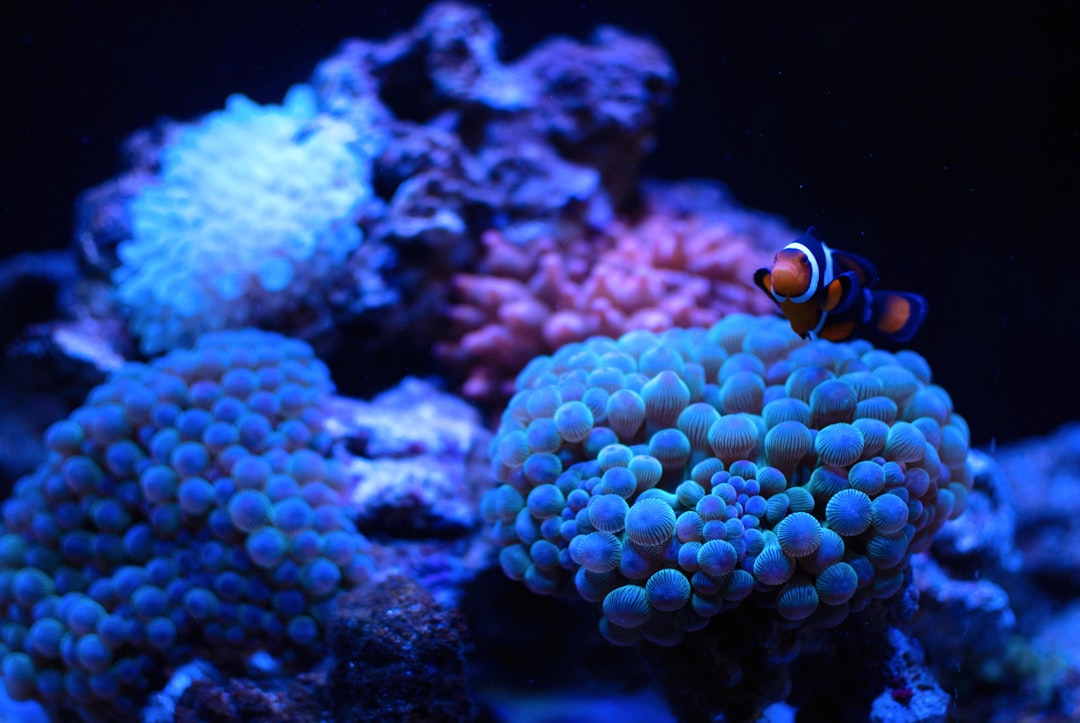
Why the Best Protein Skimmers for Small Reef Tanks Focus on Organic Removal
The primary function of a protein skimmer is to remove dissolved organic matter (DOM) before it can enter the nitrogen cycle. In a reef tank, waste comes from various sources: uneaten food, fish waste, and the slime produced by corals like Euphyllia divisa or Sarcophyton species. These organic molecules are “amphipathic,” meaning they have one end that is attracted to water (hydrophilic) and one end that is repelled by it (hydrophobic). The skimmer works by injecting a massive amount of microbubbles into a reaction chamber. The hydrophobic ends of the organic molecules cling to the air bubbles and are carried upward into a collection cup. This process is critical for maintaining the tight water parameters required by reef keepers, specifically keeping nitrates below 5 ppm and phosphates below 0.03 ppm. You can read more about the chemical nuances of this in our guide on how to control nitrates and phosphates in a reef tank.
Beyond nutrient export, the best protein skimmers for small reef tanks provide essential gas exchange. Small tanks often suffer from low pH levels, especially in modern homes with high CO2 concentrations. According to research from The National Oceanic and Atmospheric Administration (NOAA), high CO2 levels lead to ocean acidification, a process that is mirrored in your aquarium and inhibits the ability of corals to calcify and build their skeletons. By vigorously mixing air and water, a skimmer helps drive off excess CO2 and maintains an oxygen-saturated environment. This is vital for the health of both your fish and the beneficial bacteria living in your live rock. Without this aeration, you may see your alkalinity (dKH) swing more wildly as the tank’s buffering capacity is tested by fluctuating pH levels. A stable pH of 8.1 to 8.3 is much easier to maintain when you have a skimmer constantly processing the water.
Furthermore, a skimmer acts as a safety net. If a large snail dies or a coral colony undergoes a “RTN” (Rapid Tissue Necrosis) event, the sudden influx of decaying organic matter can overwhelm a small tank’s biological filter. A high quality skimmer will react to this change in water chemistry by producing more foam, effectively pulling the decaying matter out of the system before it causes an ammonia spike. This proactive removal is why experienced reefers consider the skimmer the heart of the filtration system. You are not just filtering the water; you are actively stripping out the precursors to pollution.
Comparing the Best Protein Skimmers for Small Reef Tanks: Internal vs. External
When selecting the best protein skimmers for small reef tanks, you must decide where the unit will physically sit. Small reef systems, such as the popular 20 gallon “Long” or 30 gallon “All-In-One” (AIO) cubes, have limited real estate. The three primary configurations are internal (in-tank), hang-on-back (HOB), and in-sump. For an AIO tank, you’ll need an internal model that can fit into the narrow rear chambers. These chambers are often only 3 to 4 inches wide, which limits your options. You’ll need to measure your rear chamber’s width, length, and water depth before buying, as many skimmers require a specific water level to function correctly.
An internal model like the Bubble Magus MiniQ Internal Nano Protein Skimmer is designed specifically for these tight spaces. It uses a DC powered pump, which is a significant advantage in a small tank because it generates less heat and allows for fine-tuning of the air-to-water ratio. If you put a high-heat AC pump in a 10 gallon tank, you might find your temperature swinging outside the safe 77 to 80 degree Fahrenheit range. The internal design also means that if the skimmer overflows, the water stays inside the tank rather than ending up on your floor. This “fail-safe” nature makes internal skimmers the preferred choice for hobbyists who want to avoid water damage.
Conversely, if your tank does not have a rear filtration chamber and you are not running a sump, you must use a hang-on-back model. The IOAOI Protein Skimmers for Saltwater Aquariums Hang On Protein Skimmer is a robust solution for this scenario. HOB skimmers move the bulky reaction chamber to the outside of the tank, which preserves precious swimming space for your fish and leaves more room for coral placement. However, HOB units require a reliable siphon or pump to move water out of and back into the tank. This introduces a slight risk of external leaks. When using a HOB skimmer, you must ensure the unit is perfectly level to prevent “skimmate” (the waste liquid) from leaking down the back of the tank. The trade-off for this risk is a much larger reaction chamber, which generally leads to more efficient waste removal and better oxygenation compared to tiny internal units.
Safety Warning: Electrical and Water Management
Before installing any electrical equipment in or around your reef tank, you must ensure your system is safe. Saltwater is highly conductive, and the combination of water and electricity is lethal.
- Drip Loops: Always use a drip loop on every power cord. This is a simple loop in the cord that hangs below the outlet, ensuring that any water traveling down the cord drips off at the bottom of the loop rather than entering the electrical socket.
- GFCI Outlets: Your aquarium should only be plugged into a Ground Fault Circuit Interrupter (GFCI) outlet. If a piece of equipment like a skimmer pump develops an internal short, the GFCI will trip and cut power instantly, preventing electrocution.
- CO2 Safety: If you are using a skimmer to manage pH, ensure your room is well-ventilated. In tight, modern homes, a skimmer can actually pull CO2 into the tank if the room air is stale. Many hobbyists run a small airline from the skimmer intake to an outside window or use a CO2 scrubber.
- Carbon Monoxide: Always maintain working CO2 and CO detectors in the same room as your aquarium if you use gas appliances. While the skimmer helps with oxygenation, it cannot protect you or your livestock from gas leaks.
How to Set Up and Dial In Your New Protein Skimmer
Setting up a protein skimmer is not a “plug and play” operation. It requires a specific sequence of steps to ensure it doesn’t overflow or produce excessive microbubbles in the display tank. The “break-in period” is a real phenomenon where the plastic surfaces of a new skimmer are coated in manufacturing oils that prevent stable foam from forming. This period can last from 48 hours to two weeks.
Step-by-Step Installation Guide
- Pre-Rinse the Unit: Before placing the skimmer in your tank, disassemble it and rinse all parts (except the pump motor block) in lukewarm tap water. Do not use soap or detergents, as these will cause the skimmer to foam uncontrollably for days and could kill your corals. A light wipe with a soft cloth will remove most manufacturing residues.
- Position and Water Level: Place the skimmer in your tank or sump. You must check the manufacturer’s specifications for the “optimal water depth.” If the water is too deep, the skimmer will overflow regardless of the settings. If it is too shallow, the bubbles will never reach the collection cup. Use a dedicated skimmer stand if necessary to achieve the correct height.
- Initial Adjustment: Open the air intake valve completely and set the water outlet to the “fully open” position. Plug in the pump. At this stage, the bubbles should be low in the body of the skimmer. You do not want the foam reaching the cup yet.
- The Break-In Period: Let the skimmer run in this “open” state for 24 to 48 hours. You will see a lot of erratic bubbling, and you might see microbubbles escaping into the main tank. This is normal. Once a “slime coat” of bacteria and organics forms on the inside of the skimmer, the foam will become more stable.
- Fine-Tuning the Foam: After the break-in period, slowly close the water outlet valve. This will raise the water level inside the skimmer body. You want the “break point” (where the large bubbles turn into fine froth) to be at the base of the collection cup neck.
- Wet vs. Dry Skimming: If you want “wet” skimmate (tea-colored liquid), raise the water level slightly higher. If you want “dry” skimmate (thick, dark green sludge), keep the water level lower in the neck. Most reefers aim for a medium-dark liquid that requires emptying the cup twice a week.
Comparison of Small Tank Protein Skimmer Features
| Feature | Bubble Magus MiniQ | IOAOI HOB Skimmer | AQQA Nano Skimmer |
|---|---|---|---|
| Mounting Type | Internal / AIO Chamber | Hang-On-Back (External) | Internal / Surface |
| Pump Type | 5V DC (USB Powered) | AC Powered | AC Powered |
| Best For | 10-20 Gallon AIO Cubes | 20-50 Gallon Standard Tanks | 5-15 Gallon Nano Tanks |
| Primary Benefit | Silent, tiny footprint | Large reaction volume | Surface film removal |
| Maintenance | Easy cup removal | Requires more clearance | Very simple / Low freq |
The choice between these models depends on your specific tank geometry. The Bubble Magus MiniQ is the gold standard for hidden filtration in All-In-One systems because its DC pump allows for precise control that AC pumps lack. However, the IOAOI model provides much more “contact time” (the amount of time the air bubbles spend in the water), which is a key metric for skimmer efficiency. If you have the space behind your tank, the HOB option will almost always outperform a tiny internal unit in terms of raw organic export.
Common Mistakes and Troubleshooting Protein Skimmer Issues
One of the most frequent mistakes beginners make is constantly fiddling with the skimmer settings. Protein skimmers are highly sensitive to surface tension. When you put your hands in the tank, feed the fish, or add epoxy to mount a new Micromussa lordhowensis frag, the surface tension of the water changes instantly. This usually causes the foam to “collapse,” and the skimmer will stop producing waste for several hours. If you adjust the skimmer during this time to “fix” it, the unit will likely overflow once the surface tension returns to normal. You must learn to leave the skimmer alone after feeding or maintenance.
Another common problem is the “microbubble plague.” This occurs when tiny bubbles escape the skimmer and fill the display tank, making the water look cloudy. This is usually caused by a skimmer that is brand new or one where the flow rate is set too high. To troubleshoot this, first check if the skimmer is sitting in the correct water depth. If the depth is correct, try placing a piece of coarse filter foam at the skimmer’s outlet to trap the bubbles before they enter the main tank. Over time, as the skimmer “slimes up,” the microbubbles will naturally decrease. If they persist, check the air intake venturi for salt creep. A small blockage in the air intake will change the air-to-water ratio and cause the pump to push more water (and bubbles) out the bottom.
Finally, many hobbyists fail to clean the “neck” of the skimmer. The waste collects on the inside of the riser tube leading to the cup. As this gunk builds up, it acts as a lubricant, preventing new foam from climbing into the cup. Even if the cup isn’t full, you should grab a soft brush and clean the neck every 5 to 7 days. According to a study published in the Journal of Marine Science and Engineering, the efficiency of foam fractionation is directly related to the cleanliness of the interface surfaces. A dirty skimmer neck can reduce export efficiency by over 50%. Regular maintenance is not just about aesthetics; it is about keeping the equipment functional.
FAQ: Frequently Asked Questions About Nano Skimmers
How long does it take for a protein skimmer to start working?
A new protein skimmer typically requires a break-in period of 48 hours to 7 days. During this time, the plastic surfaces are shedding manufacturing oils and chemical residues that interfere with bubble formation. You might see the skimmer “over-foaming” (filling the cup with clear water) or “under-foaming” (no bubbles reaching the neck). The best approach is to run the skimmer in a shallow setting and wait. Once a biological film develops on the internal surfaces, the foam will stabilize. Avoid the temptation to use chemicals to speed this up; patience is the only reliable solution. If the skimmer still isn’t producing dark waste after 10 days, check your bioload; if you have very few fish or feed very lightly, there may simply not be enough organic matter to form a stable foam.
Why is my protein skimmer overflowing with clear water?
Overflowing is usually caused by one of three things: incorrect water depth, a change in surface tension, or a blocked air intake. First, ensure the skimmer is sitting in the exact depth of water recommended by the manufacturer. Even a half-inch difference can cause an overflow. Second, check if you have recently added water conditioners, epoxy, or certain medications, as these significantly increase foaming. Finally, inspect the venturi (the part where the air line meets the pump). If salt creep blocks the air intake, the pump will pull in 100% water instead of an air-water mix, causing the internal water level to rise rapidly and flood the cup. Cleaning the venturi with warm RO/DI water usually solves this.
Do I really need a protein skimmer if I do weekly water changes?
While weekly water changes of 10-20% help export nitrates and replenish trace elements like calcium and magnesium, they do not provide the continuous gas exchange and organic removal that a skimmer offers. A skimmer works 24/7 to remove waste before it breaks down, whereas water changes are a “point-in-time” solution. For a tank with hardy soft corals, you might get away without one. However, if you are keeping sensitive SPS corals or have a high fish bioload, a skimmer provides a necessary safety margin. It also removes the oily surface film that blocks light and oxygen. Think of a skimmer as a supplement to water changes, not a replacement for them. It allows for a more forgiving and stable ecosystem.
Conclusion
The best protein skimmers for small reef tanks are those that balance a compact footprint with reliable, adjustable performance. Whether you choose an internal model like the Bubble Magus MiniQ Internal Nano Protein Skimmer for your AIO or a hang-on-back unit for a standard glass tank, the goal remains the same: the removal of dissolved organics and the maintenance of high oxygen levels. By understanding the physics of foam fractionation and avoiding common setup mistakes, you can ensure your reef remains a healthy environment for your corals and fish. Don’t let waste accumulate and cause a crash; invest in a quality skimmer and stay diligent with your cleaning routine.
If you found this guide helpful, consider bookmarking it for future reference when you need to troubleshoot your equipment.
Related reading: