Macroalgae in the reef: refugium species and display options
This post contains affiliate links. As an Amazon Associate, I earn from qualifying purchases at no extra cost to you.
The obsession with ultra-low nutrient systems (ULNS) has led many reefers down a path of sterile, unstable environments that crash the moment a single snail dies. We have spent years trying to strip every trace of nitrate and phosphate from our water, only to realize that a healthy reef needs a biological engine to process waste, not just a row of expensive chemical resins. Macroalgae represents the most effective, natural, and visually stunning way to achieve this balance. Whether you are tucking a ball of Chaetomorpha into a hidden sump or cultivating a vibrant forest of Halymenia in your main display, you are moving away from a fragile laboratory setup and toward a resilient ecosystem. Macroalgae provides a massive surface area for microfauna, stabilizes pH through photosynthesis, and competes directly with the nuisance film algae that plagues so many hobbyists. It is time to stop viewing algae as the enemy and start treating it as the backbone of your reef’s filtration strategy.
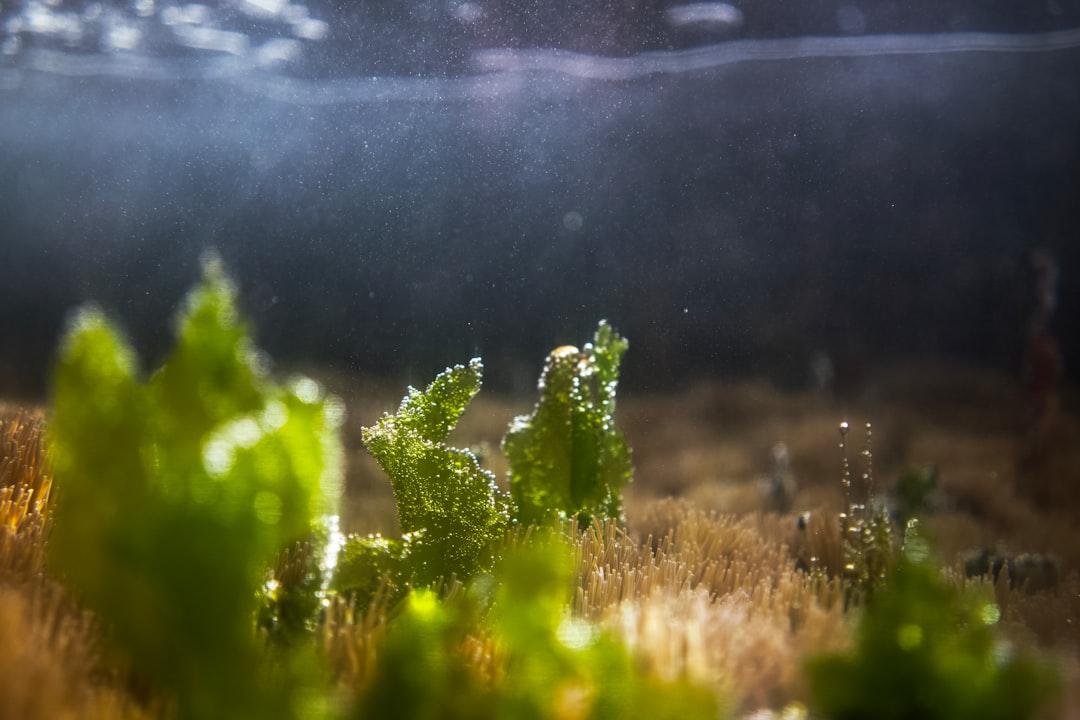
Photo by Erwan Hesry on Unsplash
The Refugium Powerhouse: Maximizing Nutrient Export
The primary reason most reefers introduce macroalgae is for nutrient management within a dedicated refugium. A well-designed refugium acts as a biological filter that never needs its media replaced. The gold standard for this application remains Chaetomorpha linum, often simply called Chaeto. This species does not root or attach to rocks; instead, it forms a dense, springy mass that excels at trapping detritus and absorbing inorganic nutrients. In our experience, the key to success with Chaeto is the tumble. If the mass sits stagnant, the center will eventually die off due to lack of light and flow, releasing the very nutrients you are trying to export. You want a high-flow environment where the algae can rotate, ensuring every strand receives equal exposure to your refugium light.
Beyond Chaeto, Ulva lactuca (Sea Lettuce) is an underrated powerhouse for nutrient export. It grows incredibly fast and has a high surface area to volume ratio, making it a sponge for nitrates. The added benefit of Ulva is its utility as a supplemental food source. If you keep Tangs or Rabbitfish, you can harvest sheets of Ulva from your sump and feed them directly to your display. This creates a closed-loop nutrient cycle where waste is converted into high-quality live food. However, Ulva is more prone to fragmentation than Chaeto. If your return pump intake is not properly screened, you might find small green flakes clogging your powerheads in the main tank.
When setting up a refugium for maximum export, you must commit to regular harvesting. Macroalgae does not “remove” nutrients; it stores them in its tissue. If you let the refugium become overgrown, the growth rate slows down as the algae becomes self-shading. You must physically remove a portion of the algae every few weeks to make room for new, vigorous growth. This physical removal is the actual “export” step of the process. Think of it like a biological protein skimmer that you have to empty manually. If you ignore the harvest, the algae can eventually “crash” or go into a reproductive phase, dumping all those stored nutrients back into the water column in a single, disastrous event.
Display Options for Macroalgae: Aesthetics Meets Biological Filtration
Integrating macroalgae into the reef display tank is a bold move that separates the true naturalists from the coral-only purists. While some fear that macroalgae will overrun their Acropora or Montipora, choosing the right species and practicing diligent pruning allows for a stunning, multi-layered aesthetic. Red macroalgae species are particularly prized for their contrast against the blues and greens of a typical reef. Halymenia floridana, commonly known as Dragons Breath, is perhaps the most popular choice. It features fluorescent orange tips under actinic lighting and grows in a beautiful, ruffled flame-like shape. It does not have invasive holdfasts, meaning it is easy to move or remove if it grows too large for its designated spot.
Another excellent display candidate is Botryocladia, or Red Grape Algae. This species creates small, translucent red bladders that look like clusters of grapes. It adds a unique texture that you simply cannot get from corals alone. However, unlike Dragons Breath, Red Grape Algae can be more difficult to control if it takes hold in the crevices of your rockwork. You must be proactive in your placement. We recommend securing these species to a small, isolated “macro-rock” rather than your main scape. This allows you to pull the entire rock out for easy pruning without disturbing your coral colonies.
For those who want a “planted tank” look in their saltwater system, Caulerpa prolifera offers a blade-like appearance similar to seagrass. It is a fast grower and provides an incredible habitat for copepods and small fish like Dragonets. However, Caulerpa species carry a significant risk: sporulation. When the plant becomes stressed or reaches a certain density, it can turn white and release its cellular contents into the water. This can cause a massive oxygen drop and nutrient spike. To mitigate this in a display setting, you must maintain extremely stable water parameters and never allow the colony to become too thick. Pruning should be done by cutting the runners (rhizomes) rather than just tearing the blades, which helps prevent the plant from “bleeding” into the water.
Feeding the Forest: Water Chemistry for Macroalgae in the Reef
You cannot expect macroalgae to thrive in a tank where you are aggressively chasing zero nitrates. Macroalgae are plants; they need food. If your nitrate levels drop below 1-2 ppm or your phosphates hit 0.00 ppm, your macroalgae will begin to “melt” or turn translucent. This is a sign of starvation. For a healthy macro-integrated reef, we recommend maintaining nitrates between 5-10 ppm and phosphates between 0.03-0.10 ppm. This provides enough “headroom” for the algae to grow without fueling a massive outbreak of nuisance hair algae.
To manage these levels accurately, you need professional-grade testing equipment. We have found that the Salifert Master Reef Testing Combo Kit is essential for monitoring the fundamental nitrogen cycle. Beyond just N and P, macroalgae require trace elements, specifically iron and iodine. Iron is the limiting factor for many green macroalgae species. If your Chaeto looks pale or yellow instead of deep green, an iron deficiency is the likely culprit. Iodine is equally important, particularly for red species like Halymenia.
Furthermore, calcified macroalgae like Halimeda (Money Plant) actually consume calcium and alkalinity to build their “skeletons.” If you have a large amount of Halimeda in your display, you are essentially competing with your corals for the same building blocks. You must monitor these levels just as closely as you would in an SPS-dominant tank. We recommend using the Red Sea Reef Foundation Pro Test Kit to keep track of Calcium, Magnesium, and Alkalinity. For daily checks, the Hanna Marine Alkalinity Checker is an absolute necessity, as alkalinity swings are the fastest way to stress both your corals and your macroalgae. Consistent chemistry is the difference between a lush underwater garden and a tank full of decaying organic matter.
Lighting and Flow Requirements for Macroalgae
The lighting requirements for macroalgae are often misunderstood. Many hobbyists try to grow refugium algae using cheap, hardware-store floodlights. While this might work for a time, it rarely provides the specific spectrum needed for long-term health. Most macroalgae, especially green species, thrive in the 6,500K to 5,000K range, which mimics natural sunlight. However, recent research and hobbyist experience have shown that heavy red and blue peaks (similar to grow lights used in hydroponics) can significantly accelerate growth rates in Chaetomorpha. If you are growing red macroalgae in your display, they are much more adaptable to the blue-heavy spectrum used for corals, but they still benefit from a broader spectrum that includes some white and red light.
Flow is the second half of the equation. In a refugium, the flow should be “chaotic” rather than linear. You want the water to penetrate the entire mass of algae. Linear flow tends to push the algae into a corner, where the center of the ball becomes a stagnant “dead zone.” This leads to detritus accumulation and localized rot. In the display tank, macroalgae like Halymenia or Caulerpa prefer moderate, indirect flow. High, direct flow from a wavemaker can tear the delicate blades or dislodge the plant from its mounting point. You should aim for a gentle swaying motion, which ensures that the boundary layer of water around the algae is constantly refreshed, allowing for efficient gas exchange and nutrient uptake.
For those interested in the technical side of macroalgae cultivation, understanding PAR (Photosynthetically Active Radiation) is vital. Most macroalgae are quite flexible, but they generally perform best at PAR levels between 100 and 200. If you blast them with 400+ PAR (SPS levels), you may see photo-inhibition or bleaching. Conversely, if the light is too dim (below 50 PAR), the algae will grow leggy and thin as it “stretches” for the surface. This is why we emphasize the importance of pruning; as the colony grows, the internal layers receive less light, necessitating a trim to keep the entire biological mass active and healthy.
Macroalgae Species Comparison and Decision Framework
Choosing the right macroalgae depends on your primary goal: are you looking for sheer nutrient export, or are you trying to enhance the visual appeal of your reef? The table below breaks down the trade-offs between the most common species kept in the hobby today.
| Species Name | Location | Growth Rate | Nutrient Export | Risk Level | Ease of Care |
|---|---|---|---|---|---|
| Chaetomorpha linum | Refugium | High | Excellent | Low | Easy |
| Ulva lactuca | Refugium/Display | Very High | Excellent | Moderate | Easy |
| Halymenia floridana | Display | Moderate | Good | Low | Moderate |
| Caulerpa prolifera | Display/Refugium | Very High | Excellent | High (Sporulation) | Moderate |
| Botryocladia sp. | Display | Slow | Low | Moderate | Moderate |
| Halimeda sp. | Display | Moderate | Low | Low | Hard (Calcified) |
When deciding, consider your livestock. If you have a large population of herbivorous fish, any macroalgae in the display will likely be eaten before it can establish itself. In that case, a protected refugium is your only option. If you have a predator tank or a reef with only “safe” fish like Wrasses and Clowns, the display options become much more viable. You must also consider your maintenance schedule. Fast-growing species like Caulerpa or Ulva require weekly attention. If you prefer a “hands-off” approach, stick with Chaetomorpha in the sump or slower-growing red species in the display.
Safety Warning: Macroalgae are highly sensitive to copper-based medications and certain aggressive algaecides. If you are treating your tank for parasites like Cryptocaryon irritans (Marine Ich), never dose copper into a system containing macroalgae. The copper will kill the algae almost instantly, leading to a massive collapse and a subsequent ammonia spike that can kill your fish and corals. Always use a separate quarantine tank for such treatments. Furthermore, if you are using specialized phosphate removers (GFO), monitor your macroalgae closely. Stripping phosphate too quickly can cause the algae to starve and die off, creating a secondary nutrient crisis.
Common Mistakes and Troubleshooting
The most frequent mistake reefers make with macroalgae is “setting it and forgetting it.” A refugium is not a trash can where you throw algae and expect it to work forever. The most common sign of trouble is “melting,” where the algae turns white or translucent and begins to break apart. This is almost always caused by one of three things: nutrient starvation, lack of trace elements (Iron), or improper lighting. If your nitrates and phosphates are near zero, your algae is starving. You must either increase your fish feeding, decrease your protein skimming, or start dosing nitrates to keep the algae alive. It sounds counter-intuitive to dose nitrate into a reef tank, but for a macro-heavy system, it is often a necessity to maintain stability.
Another issue is the accumulation of detritus within the algae mass. Over time, the dense structure of Chaetomorpha or Caulerpa acts as a mechanical filter, trapping uneaten food and fish waste. If this waste is not removed, it rots, fueling the very nutrient problems you are trying to solve. Every time you harvest your algae, you should take the opportunity to gently shake the remaining mass in a bucket of tank water to dislodge the “mulm.” This prevents the refugium from becoming a source of pollution rather than a solution.
Finally, keep an eye out for “hitchhiker” algae. Nuisance species like Bryopsis or Green Hair Algae (GHA) can sometimes take root inside your macroalgae mass. Because the macroalgae is absorbing nutrients, the nuisance algae has a front-row seat to the buffet. If you see GHA growing on your Chaetomorpha, you must remove it immediately. If it gets out of hand, it will eventually smother your macroalgae, cutting off its light and flow. This is why we recommend starting with “clean” macroalgae cultures from reputable vendors who treat their stock for pests and nuisance hitchhikers.
FAQ
Can I grow macroalgae in a tank with a high-intensity LED meant for SPS corals? Yes, but you must be careful with placement and acclimation. Most macroalgae species are found in shallower waters, but they are often shaded by other structures or found in lagoons where the light is filtered. If you place a red macroalgae like Halymenia directly under a high-intensity LED puck, it will likely bleach. The best approach is to place display macroalgae in the lower third of the tank or in partially shaded areas. Over time, the algae can adapt to higher light, but “light shock” is a real risk. For green species like Caulerpa, they are generally more tolerant of high light, but even they can suffer from photo-inhibition if the PAR levels are extreme.
What should I do if my Caulerpa starts turning white? This is a sign of impending sporulation, also known as “going sexual.” If you see white or translucent patches on your Caulerpa, you must act immediately. Remove the affected sections from the tank. If a large portion of the colony is turning white, it is often safer to remove the entire mass. Once Caulerpa releases its gametes, the water will turn a milky green, oxygen levels will plummet, and you will face a massive nutrient spike. If this happens, perform a large water change immediately and run fresh activated carbon to absorb the organic material. This risk is why many reefers prefer Chaetomorpha, which does not sporulate in this manner.
Do I need to dose CO2 for macroalgae like people do in freshwater planted tanks? In a saltwater reef tank, you generally do not need to dose CO2. The gas exchange at the surface and the respiration of your fish and corals typically provide enough CO2 for the algae. In fact, one of the primary benefits of macroalgae is that it consumes the CO2 produced by your tank during the day, which helps stabilize and raise your pH. Many reefers run their refugium lights on a “reverse daylight cycle” (on at night, off during the day). This ensures that the algae is consuming CO2 when the display lights are off, preventing the typical nighttime pH drop that occurs in most reef systems.
Conclusion
Macroalgae is far more than just a tool for nutrient export; it is a vital component of a mature, stable reef ecosystem. By carefully selecting species for either your refugium or your display, you can create a biological buffer that protects your corals from nutrient swings and provides a lush, natural environment for your fish. Whether you choose the reliable efficiency of Chaetomorpha or the stunning brilliance of Dragons Breath, the key to success lies in consistent monitoring of your water chemistry and proactive maintenance. Stop fighting against nature and start working with it. Your reef will be more resilient, more colorful, and significantly more interesting for it.
Bookmark this guide for your next refugium overhaul or display tank expansion.