How to recover from a reef tank crash
This post contains affiliate links. As an Amazon Associate, I earn from qualifying purchases at no extra cost to you.
Walking into a room and smelling the unmistakable, pungent scent of dying coral tissue is a nightmare every hobbyist fears. Whether it was a heater that stuck on, a failed dosing pump that dumped a gallon of alkalinity buffer, or a prolonged power outage, a reef tank crash is a traumatic event for both the livestock and the keeper. The initial instinct is often to panic and start dumping every chemical “remedy” into the water, but that is exactly how you turn a manageable loss into a total wipeout. Stability is what reef inhabitants crave, and even a stable “bad” environment is sometimes better than a rapidly fluctuating “improving” one. You need a calculated, cold-blooded approach to stop the necrosis and begin the long road back to a thriving ecosystem. This process is not about quick fixes; it is about systematic restoration of the biological and chemical foundations that allow Acropora, Euphyllia, and your fish to survive.
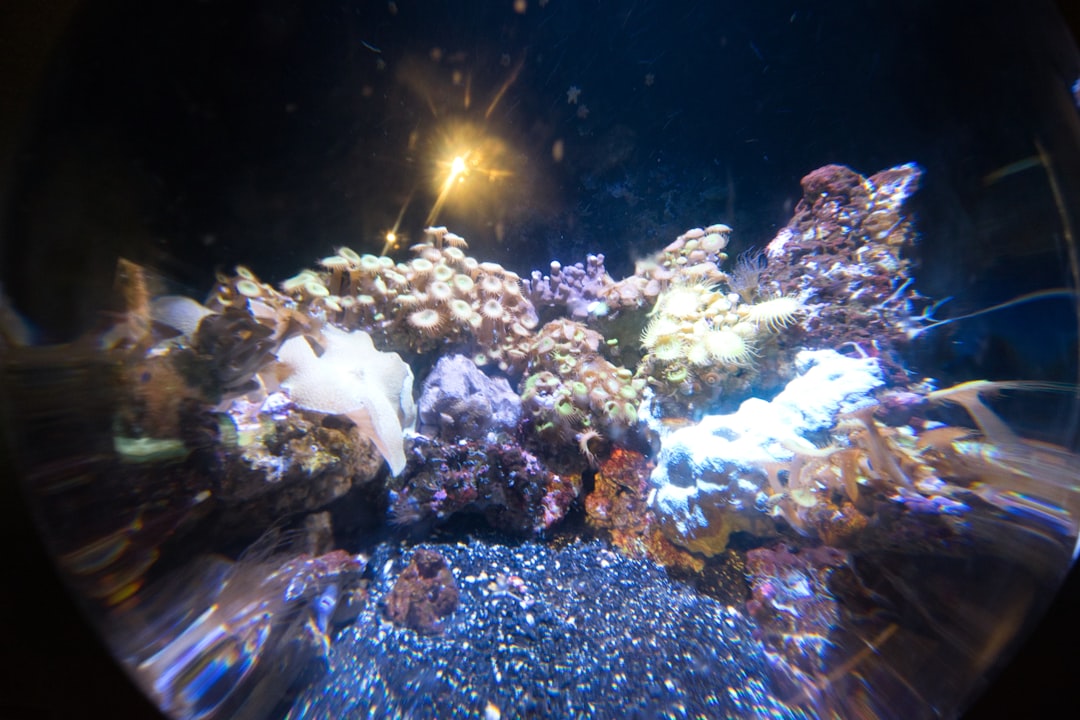
Photo by Michael Descharles on Unsplash
Immediate Triage: Stopping the Downward Spiral
The first hour after discovering a crash is the most critical. You must identify the “smoking gun” before you take any corrective action. If you start changing water while a failed heater is still cooking the tank, you are just pouring money into a boiling pot. Check your temperature first. If the water is above 84 degrees Fahrenheit or below 72 degrees Fahrenheit, that is your primary culprit. Next, look at your equipment. Is a pump leaking stray voltage? Is your protein skimmer overflowing? In our experience with Acropora colonies, we have found that rapid tissue necrosis (RTN) can be triggered by even a minor stray voltage leak that goes unnoticed for days.
Safety Warning: Before reaching into a crashing tank, always check for stray voltage with a multimeter or ensure your equipment is plugged into a GFCI outlet. If you suspect an electrical failure, unplug everything before touching the water. Additionally, if the crash involves a mass die-off of Palythoa or Zoanthid corals, be aware of palytoxin risks. Wear gloves and eye protection, and ensure the room is well ventilated to avoid inhaling aerosolized toxins from dying polyps.
Once the immediate physical threat is neutralized, you must remove the dead biomass. Dying corals release organic compounds and ammonia that fuel a secondary crash. If a coral is 90 percent white skeleton, frag the remaining healthy 10 percent and discard the rest. Do not try to save a doomed colony; the decaying tissue will only poison the survivors. Use a turkey baster to blast loose film algae and necrotic tissue off the rocks so your mechanical filtration can catch it. Change your filter socks or poly-filter pads every few hours during this phase. The goal is to reduce the biological load as fast as possible to prevent an ammonia spike that will kill your fish and remaining invertebrates.
The Water Chemistry Reset: Dilution and Detox
When you need to recover from a reef tank crash, dilution is your most powerful tool. However, you cannot simply swap 100 percent of the water and expect things to improve. A massive, sudden change in parameters like salinity or alkalinity can kill the survivors that managed to adapt to the “crash” conditions. You should aim for a 50 percent water change initially, followed by 20 percent changes every 24 hours for the next three days. This staged approach gradually brings your parameters back to the “Golden Ratio” of reef keeping: salinity at 1.026 SG, alkalinity at 8.0 to 9.0 dKH, calcium at 420 to 450 ppm, and magnesium at 1350 ppm.
Ensure your replacement water is a perfect match for the temperature and salinity currently in the tank, not necessarily the “ideal” target. If your tank has drifted to 1.023 SG due to an ATO failure, do not jump straight to 1.026 SG. Match the 1.023 SG and then slowly raise it over the following week. This prevents osmotic shock. During this period, heavy use of high quality activated carbon is non-negotiable. Carbon will pull out the organic toxins and “yellowing” compounds released by stressed corals. We recommend using a reactor for maximum contact time, but a high flow area in the sump with a media bag will work in a pinch.
Chemical filtration should also include an ammonia binder if your tests show any detectable levels. While a healthy reef should have zero ammonia, a crash often overwhelms the nitrifying bacteria. Using a product that detoxifies ammonia without crashing your pH is a lifesaver for your fish. Monitor your oxidation-reduction potential (ORP) if you have a controller like an Apex; a sharp drop in ORP is a leading indicator that organic matter is still decomposing somewhere in your rockwork.
Testing Your Way Out of the Dark
You cannot manage what you do not measure. During a crash recovery, your testing frequency must increase from weekly to daily, or even twice daily. You need to track the trend of your parameters to ensure they are stabilizing rather than continuing to drift. The most important metrics right now are Ammonia, Nitrite, and Alkalinity. Alkalinity is the backbone of coral calcification, and in a crash, it often swings wildly as corals stop consuming it or as decaying matter acidifies the water.
For basic monitoring of the nitrogen cycle during the initial recovery phase, the API Reef Master Test Kit is a reliable way to get quick, color-coded results for ammonia and nitrate. It is perfect for those high-stress moments when you just need to know if the water is toxic. However, as you move into the stabilization phase where you need to precisely dial in your alkalinity and calcium to prevent further stress to sensitive species like Seriatopora or Montipora, you need higher resolution.
For that level of precision, we prefer the Salifert Master Reef Testing Combo Kit. The titration-based tests for alkalinity and magnesium are far more accurate than cheaper alternatives, allowing you to see if your alkalinity is drifting by 0.1 dKH increments. This precision is vital because a fluctuating alkalinity is often what causes “slow tissue necrosis” (STN) weeks after the initial crash event. If you are struggling with these concepts, refer to our Best Affordable Test Kits Reef Tank guide for a deeper dive into which kits offer the best value for long-term stability.
Re-establishing the Microbiome
A reef tank crash is often more than just a chemical imbalance; it is a biological collapse. The “good” bacteria that live in your live rock and sand bed can be wiped out by temperature spikes, medications, or oxygen deprivation. When these bacterial colonies die, they leave a vacuum that is often filled by “ugly” microbes like Cyanobacteria or Dinoflagellates. To recover from a reef tank crash effectively, you must proactively re-seed your tank with beneficial nitrifying and heterotrophic bacteria.
Using a concentrated bacterial starter like Dr can jumpstart the nitrogen cycle and help compete against the opportunistic pests that thrive in a post-crash environment. This is not “snake oil” — it is about introducing a high concentration of the specific strains required to process ammonia and nitrite into nitrate. We recommend dosing bacteria daily for at least a week following a major crash, especially if you had to remove a significant amount of dead rock or sand.
Beyond the nitrogen cycle, you should also consider your microfauna. Copepods and amphipods often take a massive hit during a crash. These tiny crustaceans are the “cleanup crew” that you cannot see, and they play a massive role in keeping algae at bay while your corals are too stressed to compete for nutrients. Once your ammonia and nitrite have returned to zero, adding a few bottles of live pods can help restore the natural balance of the tank. This biological diversity acts as a buffer against future swings, making the entire ecosystem more resilient.
Managing the Survivors: Coral Care Post-Crash
The corals that survive the initial 48 hours are still in a state of extreme stress. Their metabolic rates are lowered, and their slime coats are likely compromised. Now is not the time to blast them with high intensity lighting or heavy flow. In fact, we recommend lowering your light intensity by 20 to 30 percent for the first week of recovery. This reduces the photosynthetic demand on the corals’ zooxanthellae, preventing further oxidative stress. According to the National Ocean Service, environmental stressors like temperature spikes disrupt the symbiotic relationship between corals and their algae, making this recovery period vital.
If you have corals showing signs of STN, such as a slow recession from the base, do not be afraid to use a coral dip. However, avoid harsh medicinal dips that can further stress a weakened animal. A gentle iodine-based dip can help disinfect the area and prevent secondary bacterial infections from taking hold. For species like Euphyllia glabrescens (Gold Torch) or Catalaphyllia jardinei (Elegance Coral), watch for “brown jelly disease,” which can spread rapidly in a post-crash tank. If you see a brown, snot-like substance on a coral, remove it immediately and dip it outside the tank.
Check your flow patterns as well. While corals need flow to bring in nutrients and carry away waste, a crashing tank often has high levels of particulate matter that can irritate polyps. Ensure your wavemakers are providing turbulent, indirect flow rather than a direct blast. If you are unsure about where to place your recovering corals, our 2026 04 03 Coral Placement Guide Light And Flow provides specific details on the requirements for various species that might be struggling.
The 72-Hour Recovery Protocol
This decision framework is designed to give you a clear path forward when the chaos of a crash makes it hard to think straight. Follow these steps in order to maximize the survival rate of your remaining livestock.
| Phase | Timeframe | Action Item | Priority |
|---|---|---|---|
| Triage | Hour 0-2 | Identify cause, remove dead biomass, test Ammonia/pH. | Critical |
| Detox | Hour 2-6 | Start 50% water change, add fresh Carbon, check GFCI. | High |
| Stabilize | Day 1 | Match temp/salinity, dose bacterial starter, reduce lighting. | High |
| Monitor | Day 2 | Test Alk/Cal/Mag, 20% water change, clean mechanical filters. | Medium |
| Evaluate | Day 3 | Observe polyp extension, check for STN/RTN, re-test everything. | Medium |
| Restore | Day 7+ | Slowly ramp lights, resume light feeding, check ATO/Doser. | Low |
This framework assumes you have already addressed the root cause of the crash. If you are dealing with a recurring issue, such as a failing chiller, your first priority must be the hardware repair. For more details on managing temperature-related crashes, see our comparison on Chiller Vs Fan Cooling Reef Tank.
Common Mistakes and Troubleshooting
One of the most frequent mistakes hobbyists make when trying to recover from a reef tank crash is “chasing numbers.” You see your alkalinity has dropped to 6.0 dKH, so you dump in a massive dose of buffer to get it back to 9.0 dKH in an hour. This is a death sentence for corals. Rapid increases in alkalinity are often more damaging than the low levels themselves. You should never increase alkalinity by more than 0.5 dKH per day. If you need to make a large adjustment, spread it out over a week.
Another common pitfall is over-cleaning. In a panic, many keepers will scrub every rock and vacuum every inch of the sand bed. While removing detritus is good, you are also removing the very biofilm and micro-organisms that your tank needs to stabilize. Stick to removing visibly dead tissue and loose debris. Leave the deep cleaning for a month from now when the tank has regained its biological footing.
If you find that your livestock continues to die even after the water parameters have stabilized, you may be dealing with a “silent killer” like heavy metal poisoning or a cracked heater leaking copper or other toxins into the water. In this scenario, standard test kits won’t help you. You should send a water sample for ICP-OES (Inductively Coupled Plasma) testing. This will give you a breakdown of every element in your water down to the parts per billion. It is the only way to identify trace element toxicities that could be stalling your recovery.
Finally, do not resume your full feeding and dosing schedule immediately. Your corals are not growing right now; they are surviving. They do not need high levels of amino acids or heavy feedings of mysis shrimp. Excess food will only rot and add to the nutrient load. Feed your fish sparingly - just enough to keep their immune systems up - and wait until you see active growth tips on your corals before you resume your full dosing regimen.
FAQ
How long should I wait to add new corals after a crash? You should wait a minimum of four to six weeks before adding any new livestock. This “fallow” period allows the biological filter to stabilize and ensures that any secondary issues, like a bacterial bloom or a spike in nitrates, have been fully resolved. You want to see consistent growth in your surviving corals and stable water parameters for at least 14 days before introducing anything new. Adding corals too soon puts unnecessary stress on the new arrivals and can trigger another mini-cycle if the biological filter is still fragile.
My water is cloudy after the crash. Should I be worried? Cloudy water is usually a sign of a bacterial bloom or finely suspended organic matter. If the cloudiness is white and “milky,” it is likely a bacterial bloom feeding on the organics released by dying livestock. While the bacteria themselves aren’t harmful, they consume a massive amount of oxygen. Ensure you have plenty of surface agitation and that your protein skimmer is running at peak efficiency. If the water is yellow or brown, it is organic staining, and you need to replace your activated carbon immediately.
Can I save a coral that is half-bleached? Yes, but it requires intervention. If the bleaching is due to heat or light stress, move the coral to a lower, shaded area of the tank and ensure it has moderate flow. If the tissue is actually sloughing off (RTN/STN), you should frag the healthy portion of the colony. Cut at least a half-inch into the “healthy” looking tissue to ensure you aren’t leaving any infected material behind. Glue the healthy frag to a new plug and discard the dying skeleton. Many hobbyists have saved prized Acropora colonies by acting quickly and sacrificing the main colony to save a few small frags.
Conclusion
Recovering from a reef tank crash is a test of patience as much as a test of chemistry. The urge to “do something” is powerful, but often the best thing you can do is perform your staged water changes, keep your hands out of the tank, and let the biological processes re-stabilize. Focus on the basics: temperature, salinity, and alkalinity. If you can keep those three metrics stable, the rest of the ecosystem will eventually follow suit. Once the dust settles, take the time to analyze why the crash happened and implement redundancies - like a dual-stage heater controller or a battery backup - to ensure it never happens again.
Stay diligent with your testing and keep a close eye on your survivors for the next few weeks.
Related reading:
Enjoyed this guide? Bookmark it for later or share it with a friend who might find it useful.