Fish compatibility chart for reef tanks
This post contains affiliate links. As an Amazon Associate, I earn from qualifying purchases at no extra cost to you. In our experience, the right approach makes all the difference.
Adding a new fish to your reef tank is not as simple as picking a beautiful specimen and floating the bag. If you treat your livestock list like a grocery list rather than a delicate biological puzzle, you are inviting a disaster that usually ends in shredded fins, stressed corals, and expensive losses. Most hobbyists look at a fish compatibility chart for reef tanks and see a green light for “peaceful” fish, but they fail to realize that peace is a relative term in a glass box. Compatibility is not just about whether one fish will eat another. It is about territorial overlap, competition for the same food sources, and how a fish interacts with your specific coral inhabitants like Acropora or Euphyllia. You must approach stocking with a strategy that accounts for the psychological needs of the fish, not just their size or color.
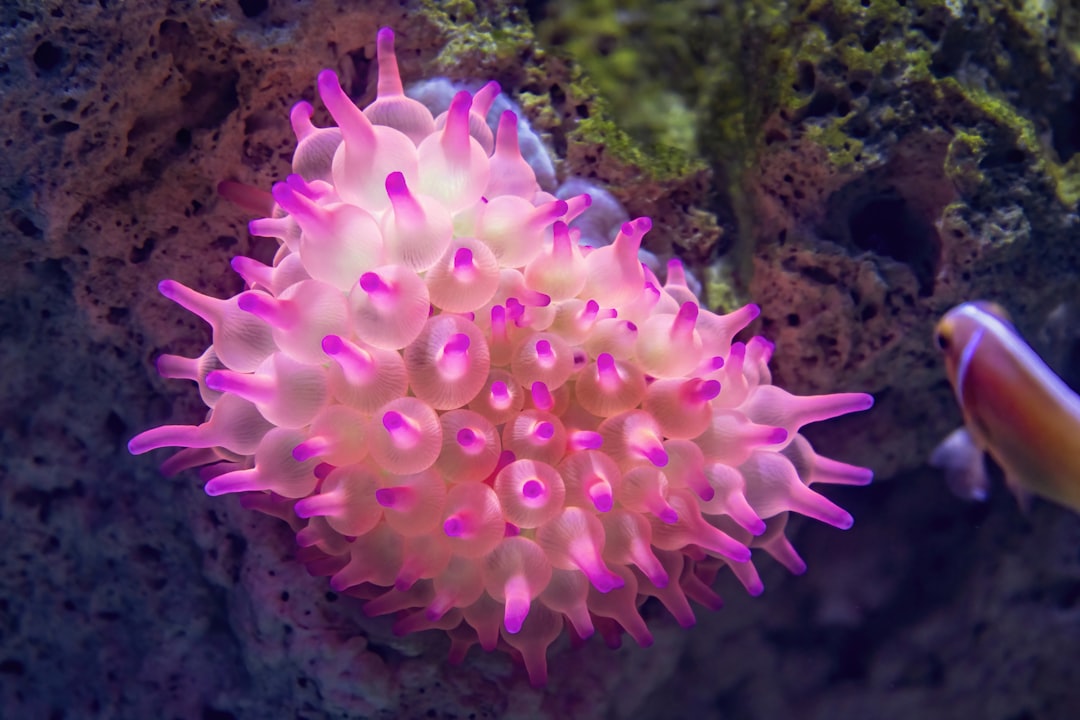
Photo by David Clode on Unsplash
The Biological Logic of Reef Tank Aggression
To understand compatibility, you have to understand why fish fight in the first place. In the wild, a reef is a high stakes environment where space and food are limited. Many reef fish have evolved to be fiercely territorial because losing their patch of the reef means losing their life. When you put these animals into a reef tank, those instincts do not just disappear. They are magnified. Aggression in reef tanks generally falls into three categories: congeneric aggression, niche competition, and predatory instinct. Congeneric aggression happens when you put two fish of the same genus together, such as two different Zebrasoma tangs. They see each other as direct rivals for the same resources and will fight until one is dead or severely weakened.
Niche competition is more subtle but equally deadly. This occurs when fish that occupy the same level of the water column or eat the same specific food are housed together. For example, a Lawnmower Blenny (Salarias fasciatus) and a Starry Blenny (Salarias ramosus) will likely clash because they are both competing for the same film algae on your rockwork. Even if the tank is large, they will find each other. Predatory instinct is the most obvious, but even “reef safe” fish can surprise you. A large Hawkfish might be peaceful with your Tangs, but it will eventually view your decorative shrimp or tiny Neon Gobies as a snack.
You must also consider the “space to aggression” ratio. A fish that is peaceful in a 200 gallon tank can become a terror in a 40 gallon tank. When fish feel crowded, their stress hormones spike, leading to a suppressed immune system and increased irritability. This is why a fish compatibility chart for reef tanks should always be cross referenced with the minimum tank size requirements for each species. If you ignore the space needs of a fish, no amount of “peaceful” temperament will prevent it from lashing out at its tank mates.
Reading the Fish Compatibility Chart for Reef Tanks Correctly
A standard fish compatibility chart for reef tanks is a grid that uses colors or symbols to indicate whether two groups of fish can coexist. While these charts are invaluable for a quick check, they are often oversimplified. You cannot simply look at a “Yes” and assume success. For example, most charts list Clownfish and Damselfish as compatible. Technically, they are both in the family Pomacentridae, but if you put a Maroon Clownfish (Premnas biaculeatus) in a small tank with a Blue Devil Damsel (Chrysiptera cyanea), you are creating a war zone. The chart tells you they can live together, but it does not tell you that they both want to own the exact same square foot of the tank.
When you use a chart, pay close attention to the “Caution” or “Yellow” categories. These are the most important sections because they represent the “it depends” scenarios that make or break a reef tank. Usually, caution indicates that compatibility depends on the order of introduction, the size of the tank, or the specific subspecies. For instance, many Angelfish are listed as “Reef Safe with Caution.” This means they might be fine for years until one day they decide to start eating the mantle of your Tridacna clam or the polyps of your favorite Pocillopora. To truly master compatibility, you need to supplement the chart with a deep dive into the specific behavior of the fish you want. I highly recommend keeping a copy of Reef Fish Identification: Florida, Caribbean, Bahamas (New World) on your shelf to understand the natural habitats and behaviors of these species.
Furthermore, remember that charts are based on adult behavior. A juvenile Emperor Angelfish might be perfectly peaceful in a community setting, but as it transitions to its adult coloration and size, its temperament will shift. You are stocking for the adult fish, not the cute juvenile you see at the store. If the chart says “No” for two species, do not try to be the exception. These guidelines are written in the blood of fish that were lost to hobbyists who thought their tank would be different.
The Safe Foundation: Peaceful Reef Community Species
If you want a low stress reef tank, you should build your stocking list around a foundation of truly peaceful species. These are fish that rarely show aggression toward others and are generally ignored by larger, more territorial fish. Gobies are the gold standard here. Species like the Yellow Watchman Goby (Cryptocentrus cinctus) or the Randall’s Shrimp Goby (Stonogobiops randalli) are excellent additions. They stay near the bottom, often forming symbiotic relationships with pistol shrimp, and they do not bother anyone. They occupy a niche that few other fish care about, which is the key to a peaceful tank.
Another staple of the peaceful reef is the Firefish (Nemateleotris magnifica). These fish are stunning and stay in the water column, but they are very timid. They require plenty of bolt holes in the rockwork where they can hide if they feel threatened. Because they are so passive, you must ensure their tank mates are not overly boisterous. Putting a Firefish in a tank with aggressive Damsels is a recipe for a fish that stays hidden until it eventually starves. For a complete overview of how to set up an ecosystem that supports these delicate balances, The New Marine Aquarium: A Create Your Own Ecosystem Guide for Tropical Marine Fish provides an excellent framework for beginners and intermediates alike.
Fairy Wrasses (Cirrhilabrus spp.) and Flasher Wrasses (Paracheilinus spp.) are also phenomenal peaceful additions. They bring incredible color and activity to the upper levels of the tank. However, even within these peaceful groups, you have to be careful. You can often keep multiple species of Fairy Wrasses together, but you should introduce them simultaneously or add the most peaceful species first. If you add a more assertive wrasse first, it may harass any new additions that share its body shape. Always prioritize the “dither fish” — the small, active fish that stay out in the open - as they signal to more timid fish that the environment is safe.
Managing Semi-Aggressive Species and Reef Caution Fish
This is where most reef keepers get into trouble. Semi-aggressive fish, like many Tangs, Dwarf Angels, and certain Wrasses, are the “show pieces” of the hobby, but they require a firm hand in management. Tangs are notorious for their aggression, particularly the Acanthurus genus. A Powder Blue Tang (Acanthurus leucosternon) is a gorgeous fish, but it is also a “tank boss” that will terrorize anything added after it. If you plan to keep Tangs, you must have a large enough tank to allow them to swim. For a 4 foot tank, you are generally limited to the Zebrasoma or Ctenochaetus genera, such as the Yellow Tang or the Kole Tang.
Dwarf Angelfish (Centropyge spp.) are another “caution” group. While they are usually peaceful toward other fish, they are notorious nippers. A Coral Beauty or Flame Angel might be fine for six months, but once they realize that LPS corals like Acanthastrea or Trachyphyllia taste good, they will pick them to death. To mitigate this, keep these fish well fed. A hungry fish is a destructive fish. Use high quality frozen foods and seaweed sheets to keep their grazing instincts occupied on something other than your expensive corals.
The key to managing these species is “visual barriers.” When you design your aquascape, do not just make a wall of rock. Create caves, overhangs, and pillars that break the line of sight. If a territorial fish cannot see its rival from across the tank, the aggression levels drop significantly. You should also consider the use of a social acclimation box. This is a clear plastic box that hangs inside the tank, allowing you to place a new fish inside where the residents can see it but cannot attack it. This “look but don’t touch” period is essential for semi-aggressive tanks. It allows the established fish to get their initial aggression out of their system without harming the newcomer.
Stocking Order and Introduction Strategies for Success
The order in which you add fish to your reef is just as important as the species themselves. The general rule is: most peaceful first, most aggressive last. If you add a territorial Damsel or a Dottyback as your first fish, they will claim the entire tank as their territory. Every subsequent fish you add will be viewed as an invader. By starting with peaceful gobies, blennies, and flasher wrasses, you allow them to establish their “home bases” without being harassed. By the time you add the “tank boss” Tang or Angel, the smaller fish are already comfortable and know where to hide if things get heated.
When you are ready to introduce a new fish, do it at night or during a “lights out” period. Turning off the reef lights reduces the activity level of the resident fish and gives the newcomer a few hours to explore the rockwork in relative peace. Another pro tip is to heavily feed the tank right before you release the new fish. Distracting the residents with a feast makes them less likely to notice the new guy immediately.
For those keeping more aggressive species, you might even consider rearranging a few pieces of rockwork right before an introduction. This “resets” the territories in the tank, making everyone feel like they are in a new environment. This levels the playing field. However, never forget the importance of quarantine. Introducing a “compatible” fish that brings Ich or Velvet into your system will ruin your tank faster than any fight. You can read more about setting up a proper Reef Tank Quarantine Setup to ensure your new additions are healthy before they join the display.
Environmental Compatibility and Water Chemistry Stability
Compatibility is not just biological; it is environmental. You cannot expect a fish that requires high flow and cooler water to thrive in a lagoon-style tank with low flow and higher temperatures. Most reef fish are collected from areas with very stable water parameters, and their tolerance for fluctuations is lower than you might think. For a successful reef tank, you should aim for a Salinity of 1.025 to 1.026 SG, an Alkalinity of 8 to 9 dKH, Calcium levels between 420 and 450 ppm, and Magnesium between 1300 and 1400 ppm.
When fish are stressed by poor water chemistry, their behavior changes. A fish that is normally peaceful may become erratic or aggressive if the pH is swinging wildly or if nitrate levels are climbing. High nitrates (above 20 ppm) can lead to long term health issues and increased irritability in sensitive species like Anthias. To keep these parameters in check, you need reliable testing. I personally rely on the Salifert Marine Reef Test Kit for its precision, especially when monitoring Alkalinity and Calcium which are the backbone of coral health.
Safety Warning: When working with your tank’s electrical components - such as heaters, pumps, and lighting - always use a GFCI outlet and a drip loop. Saltwater is highly conductive, and a stray current can not only kill your fish but also pose a serious risk to you. Additionally, if you use a CO2 scrubber or have a tightly sealed house, monitor your pH levels closely to avoid swings that can stress your livestock. If you ever notice your fish gasping at the surface, check your aeration and ensure your CO2 levels are not dangerously high in the room.
Environmental compatibility also extends to coral choices. If you have a tank full of stinging corals like Galaxea or certain Euphyllia, your fish need enough open swimming space to avoid being stung. A fish that is constantly being nipped by coral polyps will be stressed and more likely to develop diseases like Marine Ich. If you do encounter disease, you need to know How To Treat Ich Reef Tank without destroying your biological filter or killing your invertebrates.
The Reef Stocking Decision Framework
Use this framework before every single purchase. If a fish does not pass all five checks, do not buy it.
| Check Category | Requirement | Why It Matters |
|---|---|---|
| Adult Size | Does the tank meet the adult minimum? | Stunting leads to aggression and early death. |
| Dietary Niche | Does it eat the same thing as current residents? | Resource competition is the primary cause of fighting. |
| Coral Safety | Is it known to nip at your specific coral types? | A “reef safe” fish might still eat your $200 Acropora. |
| Stocking Order | Is it more or less aggressive than current fish? | Adding a peaceful fish to an aggressive tank is a death sentence. |
| Quarantine Status | Do you have a space to observe it for 30 days? | Disease is the ultimate compatibility killer. |
This framework forces you to look past the “cool factor” of a fish and evaluate its long term impact on your ecosystem. For more information on species-specific compatibility, sites like WetWebMedia offer deep archives of real world compatibility questions and expert answers.
Common Mistakes and Troubleshooting Aggression
The single biggest mistake reef keepers make is overstocking. We all want a tank full of activity, but every fish you add increases the biological load and the social tension. When you hit the “tipping point,” a once peaceful tank can turn into a battleground overnight. If you notice a fish being bullied, do not wait for it to “work itself out.” It rarely does. The loser will be chased until it jumps out of the tank or dies from stress-induced disease.
If you have an aggressor, your first step should be the “mirror trick.” Tape a small mirror to the side of the tank. The aggressive fish will see its reflection and spend its energy attacking the “intruder” instead of its tank mates. This is a temporary fix, but it can buy you time to set up a social acclimation box or a trap. Catching a fish in a reef tank full of rock and coral is a nightmare. I recommend using a clear acrylic fish trap baited with high value food like Mysis shrimp. Avoid tearing down your aquascape unless it is a life or death emergency, as this stresses every inhabitant and can cause mini-cycles in your water chemistry.
Another mistake is failing to provide enough food. In the wild, fish spend most of their day foraging. In a reef tank, we often feed once or twice a day. This leaves a lot of “down time” for fish to get bored and start picking on each other. Use auto-feeders to provide small amounts of pellet food throughout the day, and keep a clip of Nori (dried seaweed) available for your herbivores. A full belly is the best peacekeeper in a reef tank.
FAQ
Can I keep two different types of Clownfish in the same reef tank?
In almost all cases, the answer is no, especially in tanks under 100 gallons. Clownfish are highly territorial, particularly when they reach sexual maturity and pair up. If you put a pair of Ocellaris (Amphiprion ocellaris) and a pair of Maroons (Premnas biaculeatus) in the same tank, the Maroons will eventually kill the Ocellaris. They view other clownfish as direct competitors for their host anemone or territory. If you absolutely must have different types, they need to be in a very large tank (6 feet or longer) with plenty of visual barriers and separate anemones at opposite ends.
Why is my “reef safe” Wrasse attacking my new Goby?
This is likely niche competition or territoriality based on body shape. Wrasses, particularly Six Line Wrasses (Pseudocheilinus hexataenia), are notorious for being aggressive toward small, bottom dwelling fish or any new addition that looks remotely like them. The Wrasse has established the entire tank as its foraging ground. To fix this, you may need to temporarily remove the Wrasse to a sump or acclimation box, let the Goby get comfortable for a week, and then reintroduce the Wrasse. If the aggression continues, you will have to choose between the two.
Is the “Tang Police” right about tank sizes?
While the term is often used mockingly, the core message is usually correct. Tangs are high energy, constant swimmers. When they are confined to a tank that is too short, they become extremely stressed and aggressive. A Tang that doesn’t have room to run is like a dog kept in a small crate; it will eventually lash out. For example, a Hippo Tang (Paracanthurus hepatus) should never be in a tank smaller than 6 feet (180 gallons) long as an adult. If you ignore these requirements, you are setting yourself up for a tank full of Ich and dead fish.
Conclusion
Success with a fish compatibility chart for reef tanks requires moving beyond the surface level “yes/no” and understanding the underlying biology of your livestock. By prioritizing a peaceful foundation, managing semi-aggressive species with visual barriers, and strictly following a stocking order, you can create a thriving, vibrant ecosystem. Never skip quarantine, and always respect the space requirements of your fish. Your reef should be a place of beauty and biological balance, not a constant struggle for survival. Take the time to research every addition, use the decision framework, and you will be rewarded with a healthy, long lived reef community.
Next Action: Bookmark this guide and cross reference your current “wish list” against the decision framework table above.