Clownfish and Anemone Hosting: Compatibility and Care Guide
This post contains affiliate links. As an Amazon Associate, I earn from qualifying purchases at no extra cost to you.
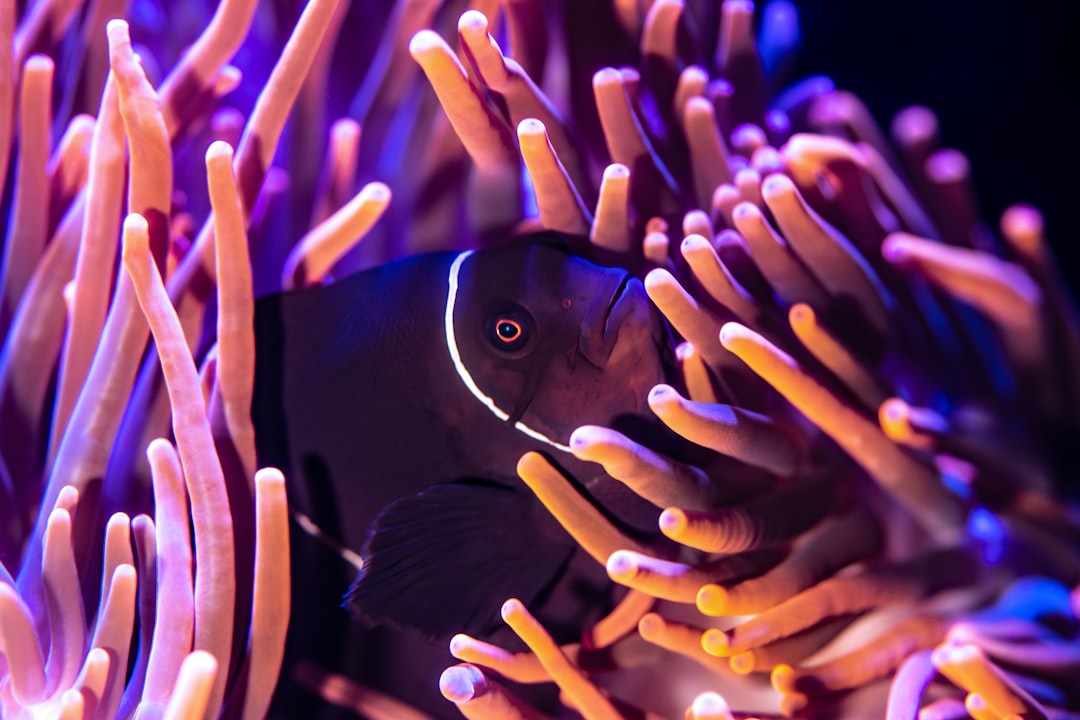
Photo by David Clode on Unsplash
The clownfish and anemone pairing is the most iconic image in reef keeping. It is also one of the most misunderstood. Walk into any fish store, buy a common ocellaris clownfish and a bubble tip anemone, put them in the same tank, and then wait. You might get hosting behavior within a week. You might wait six months. You might never see it at all – and in some cases, the anemone dies before the clownfish even gets curious.
The problem is not the fish or the anemone in isolation. The problem is that most hobbyists treat this pairing as inevitable rather than something that needs to be set up correctly. Anemones are among the most demanding invertebrates you can keep in a home reef. Get the lighting wrong, the flow wrong, or the water chemistry wrong, and the anemone will wander, bleach, or crash. A stressed anemone is not going to host anything.
This guide covers the biology, the compatible species pairings, the tank requirements, and the mistakes that prevent hosting from ever happening. We have kept multiple clownfish-anemone pairs over the years and the results tracked closely with how well we met the anemone’s needs first, before worrying about the fish.
How the Clownfish-Anemone Symbiosis Actually Works
Clownfish (family Pomacentridae, subfamily Amphiprioninae) are the only fish known to live among the stinging tentacles of sea anemones without being stung. This immunity is not genetic; it is acquired. Clownfish develop a protective mucus coating by gradually acclimating to the anemone’s nematocysts through a careful “anemone dance,” a slow touching behavior where the fish repeatedly contacts the tentacles, each time triggering a partial nematocyst discharge until the anemone essentially stops firing at that individual fish.
This matters practically because a clownfish introduced too aggressively to a new anemone can be stung. It also explains why hosting behavior takes time. The fish is doing something, even when it looks like it is just swimming near the anemone without committing.
The benefit to the clownfish is shelter and protection from predators. The benefit to the anemone is less clear in captivity – in the wild, clownfish drive off butterflyfish that would otherwise eat the anemone’s tentacles, and their waste may provide nitrogen for the anemone’s zooxanthellae. In a reef tank, neither benefit is particularly relevant, which is why hosting is behavioral rather than guaranteed.
One thing worth knowing: clownfish are not born knowing which anemone species is “theirs.” They learn from exposure. In the wild, larvae that settle near a Heteractis magnifica imprint on that species. In captivity, tank-raised clownfish often have no anemone preference and will host in a wide variety of species, or even in torch corals and frogspawn if no anemone is available.
Which Anemone Species Actually Host Clownfish
There are 10 anemone species known to host clownfish in the wild. In a home reef tank, only a few are realistically manageable. Here is what you need to know about each:
Bubble Tip Anemone (Entacmaea quadricolor)
The bubble tip anemone (BTA) is the single best choice for most reef keepers. It is the most resilient of the hosting anemones, tolerates a wider range of lighting and flow than its relatives, and will accept clownfish that were raised without any anemone experience. It also reproduces asexually by splitting, which is exciting or alarming depending on your available tank space.
BTAs come in several color morphs – green, rose, orange, and “rainbow” variants. The color is partly genetic and partly a function of lighting. Under very high PAR, some BTAs bleach to white; under lower light they often deepen to brown. The “bubbly” tentacle tips that give this species its name tend to appear when the anemone is well-fed and comfortable; elongated tentacles often indicate stress or low light.
Accepted clownfish species: Ocellaris (Amphiprion ocellaris), Percula (A. percula), Tomato (A. frenatus), Cinnamon (A. melanopus), and most other Amphiprion species in captivity.
Leathery Anemone (Heteractis crispa)
Heteractis crispa (also called the Sebae anemone in some markets, though that label is often applied incorrectly) has long, tapering tentacles and can grow to 50 cm across in the wild. In captivity, it is manageable in a large tank but more demanding than a BTA. It requires intense lighting and very stable water quality. This anemone will host Percula and Ocellaris clownfish but is not recommended for beginners.
Magnificent Sea Anemone (Heteractis magnifica)
The H. magnifica is the species most iconic in photographs – often depicted hosting Clarkii or Ocellaris clownfish across the Pacific. In captivity, it is notoriously difficult. It requires extremely high light intensity (PAR 300+ at the anemone), strong flow, and pristine water. It is also a relentless wanderer and will cross powerheads and overflows if it is not satisfied with its location. We do not recommend this species for tanks under 75 gallons or for anyone who has not successfully kept a BTA for at least a year.
Carpet Anemones (Stichodactyla spp.)
Carpet anemones (Stichodactyla haddoni, S. gigantea, S. mertensii) are among the most dangerous animals in the reef hobby. They have extremely potent nematocysts that can kill fish, and they will eat small fish that blunder into their tentacles, including occasionally the clownfish they are supposed to be hosting. They grow to enormous size (gigantea can hit 1 meter across), and they are extremely demanding of both lighting and water quality. Unless you are setting up a large species-specific tank for them, leave these in the store.
Condylactis (Condylactis gigantea)
The Haitian pink-tipped anemone sold in many fish stores is not a natural host for any clownfish species. It is a Caribbean species, and all clownfish are Pacific or Indian Ocean fish. Some captive clownfish will attempt to host in a condylactis out of desperation, but this is not a recommended pairing. The condylactis can and will sting and kill clownfish that get too close.
Clownfish-Anemone Compatibility Chart
Not every clownfish hosts every anemone. The following chart reflects what works reliably in captivity – wild associations are sometimes broader, but captive tank-raised fish have often lost the strong species imprinting of wild fish.
| Clownfish Species | Best Captive Anemone Host |
|---|---|
| Ocellaris (A. ocellaris) | BTA, H. crispa, S. haddoni |
| Percula (A. percula) | BTA, H. crispa, H. magnifica |
| Tomato (A. frenatus) | BTA, E. quadricolor variants |
| Cinnamon (A. melanopus) | BTA |
| Maroon (P. biaculeatus) | BTA, S. haddoni, S. mertensii |
| Clarkii (A. clarkii) | Most species, most flexible |
| Skunk (A. akallopisos) | H. magnifica, H. malu |
| Pink Skunk (A. perideraion) | H. magnifica |
For most home reef keepers, the practical takeaway is: get a BTA. Ocellaris and Percula clownfish – the two most common species sold – both accept it readily, and it is the most likely to survive long-term in a typical reef setup.
Setting Up a Tank That Actually Supports Hosting
Anemones fail in reef tanks more often than almost any other organism, and the reason is almost always the same: the conditions were not right before the anemone was introduced. Do not buy an anemone and expect to figure out the parameters afterward. Fix the environment first.
Lighting
BTAs and most hosting anemones require moderate to high PAR (photosynthetically active radiation). A BTA will survive at 100 PAR but will thrive and hold color at 150-250 PAR at the anemone’s position. Heteractis species need more – 250-400 PAR.
The Kessil A160WE Controllable LED Aquarium Light (Tuna Sun) is a solid option for tanks in the 20-40 gallon range that need reef-capable PAR without overwhelming the system. Its controllable output lets you ramp up gradually, which is important when introducing a new anemone that may have come from lower-light conditions in transit.
Measure PAR with an actual meter before placing your anemone. Eyeballing it is not reliable.
Flow
This is where many reef keepers get it wrong. Anemones need flow, but not direct, turbulent flow. They need gentle, multi-directional movement that causes their tentacles to sway. Direct powerhead blast directed at an anemone will cause it to close and eventually move.
The AquaClear Powerhead 30 (175 GPH) positioned to create indirect, randomized flow works well in tanks under 40 gallons. You want the water moving through the anemone from multiple angles, not a single high-velocity stream. If you have a wavemaker, use it on a pulse or gyre mode rather than a constant stream.
A wandering anemone is almost always telling you something is wrong with flow or lighting. Once it settles and stays in one place for two or more weeks, it is content.
Water Parameters
This is the least negotiable part of keeping anemones. They are not as forgiving as most soft corals.
- Salinity: 1.025-1.026 (natural seawater)
- Temperature: 76-79°F (24-26°C)
- Alkalinity: 8-9 dKH
- Calcium: 400-450 ppm
- Magnesium: 1250-1350 ppm
- Nitrate: below 10 ppm (they tolerate some, but lower is better)
- Phosphate: below 0.1 ppm
Test regularly. Use a reputable test kit – a cheap API kit is not accurate enough for alkalinity and calcium management in a tank with anemones. For guidance on choosing the right test kits for reef water chemistry, see our complete guide to affordable reef test kits.
The NOAA Ocean Service coral reef chemistry overview is worth reading if you want to go deeper into the science behind these parameters.
Tank Size and Maturity
A bubble tip anemone should not go into a tank that has been running for less than six months. They require a mature nitrogen cycle, stable chemistry, and an established population of microfauna. The minimum practical tank size for a single BTA is 20 gallons, though 30 gallons gives you more buffer. If you are considering a HelloReef 15 Gallon Beginner Clownfish Saltwater Aquarium Kit, note that this is a functional starting point for clownfish, but you will want to upgrade to a larger system if you plan to add a BTA long-term. Anemones stress quickly in small volumes when parameters drift.
Common Mistakes That Prevent Hosting
Buying the Wrong Anemone
Condylactis, long-tentacle anemones sold under misleading common names, and carpet anemones regularly end up in tanks with clownfish that were never going to host them. Always identify the scientific name before buying. If the store cannot or will not tell you the species, do not buy it.
Introducing the Clownfish Before the Anemone Is Settled
If the anemone is moving around the tank, stressed, or not fully expanded, the clownfish is not going to host it. A wandering anemone is a danger to everything in the tank – an anemone that crosses a powerhead will die instantly and can wipe out a tank with ammonia. Get the anemone settled and stationary for at least two weeks before adding the clownfish.
Forcing the Interaction
Some hobbyists place the clownfish directly into the anemone’s tentacles, trying to force the hosting behavior. This does not work and can injure or kill the clownfish. The clownfish will investigate on its own schedule. In our experience with tank-raised Ocellaris clownfish, we have seen hosting initiation happen anywhere from day three to three months after introduction. Patience is not optional here.
Keeping a Single Clownfish With an Anemone in a Small Tank
Clownfish are not naturally solitary – they live in mated pairs or harems in the wild. A single clownfish in a small tank is sometimes more aggressive toward the anemone, nipping at it excessively during the hosting dance, which can damage tentacles. A mated pair, or at minimum two juveniles of the same species, often produces calmer hosting behavior.
Ignoring the Anemone’s Condition at Purchase
Wild-caught anemones that have been in transit are often bleached (lost their zooxanthellae), shrunken, or not fully responding. A healthy anemone should be fully expanded, have a firm column (not mushy at the base), and have a closed mouth. An open, gaping mouth is a sign of stress or disease. In our experience, buying a bleached anemone and trying to rehabilitate it is a project for experienced keepers – beginners should pass on any anemone that is not obviously healthy in the store.
Frequently Asked Questions
My clownfish ignores the anemone completely. What should I do?
Nothing, at first. Tank-raised clownfish are often slow to recognize anemones as hosts because they were raised without one. Give it at least 4-6 weeks before concluding it is not going to happen. You can try placing the anemone closer to the clownfish’s sleeping area, or slightly shading the anemone so the fish has to investigate it. Never force the fish into the tentacles. If the clownfish shows zero interest after three months, it may simply prefer to host in a coral – some tank-raised fish do this indefinitely and are perfectly happy.
Can I keep two different anemone species in the same tank?
Not recommended. Different anemone species will attempt to sting each other if they make contact, and anemones move. Even if you place them far apart at setup, there is no guarantee they stay separated. In a large tank (180 gallons or more) with carefully managed placement, some keepers maintain two species successfully, but in any tank under 100 gallons, one anemone is the right answer.
My bubble tip anemone split. What do I do with the second one?
A splitting BTA is a sign the animal is healthy and well-fed – it is actually good news. The two halves will look rough for a day or two, then expand normally. You can leave both in the tank if you have space, or trade the second one to a local reef club or fish store. If your clownfish was hosting the original, it will usually begin hosting one or both halves within a day or two of the split settling.
How long does it take for clownfish to host an anemone?
This ranges enormously. Wild-caught clownfish that have hosted before can begin hosting within hours. Tank-raised clownfish with no prior anemone exposure can take anywhere from a few days to several months. The most reliable predictor is whether the anemone is settled, healthy, and in a good location – a content anemone is a much more attractive host than one that is stressed.
Do I need an anemone for my clownfish to be happy?
No. Clownfish in the wild depend on anemones primarily for protection from predators. In a reef tank with no predators, clownfish are perfectly content without an anemone. Many keep clownfish in reef tanks for years without any host and the fish thrive. The hosting behavior is rewarding to watch, but it is not a welfare requirement.
Conclusion
The clownfish and anemone relationship is one of the most rewarding things to establish in a home reef – but it rewards patience and preparation, not impulse. Get the anemone healthy and settled first. Match your clownfish species to the anemone species. Give your tank the light, flow, and water chemistry the anemone actually needs. Then wait.
If you are setting up a system specifically for a clownfish and anemone pair, start with a bubble tip anemone and a pair of Ocellaris or Percula clownfish. This is the most reliably successful combination in the hobby, and for good reason.
Before you leave, bookmark this page for reference when your clownfish starts investigating – the hosting dance is subtle at first and easy to miss if you are not watching for it.
Related Reading
- Coral Placement Guide: Light and Flow Requirements by Species – the same principles that determine where corals thrive apply directly to anemone placement.
- Reef Tank Quarantine Setup: Why and How – always quarantine new clownfish before introducing them to a tank with an anemone.