How to Treat Ich in a Reef Tank Without Crashing Your Corals
This post contains affiliate links. As an Amazon Associate, I earn from qualifying purchases at no extra cost to you.
Ich is one of the most common diseases in saltwater aquariums, and also one of the most frustrating to deal with in a reef tank. The standard treatment options for marine ich (Cryptocaryon irritans) rely on copper-based medications or chemical agents that are highly effective against the parasite but lethal to corals, invertebrates, and the live rock biology your reef depends on. You cannot simply dose copper into a reef tank and call it done.
This creates a real problem for reefers. A fish showing white spots needs treatment, but the treatment cannot happen in the display tank without catastrophic losses to everything else. The good news is that there are reliable, reef-safe approaches that actually work. They take more time and planning than copper dips, but they protect your corals and your fish.
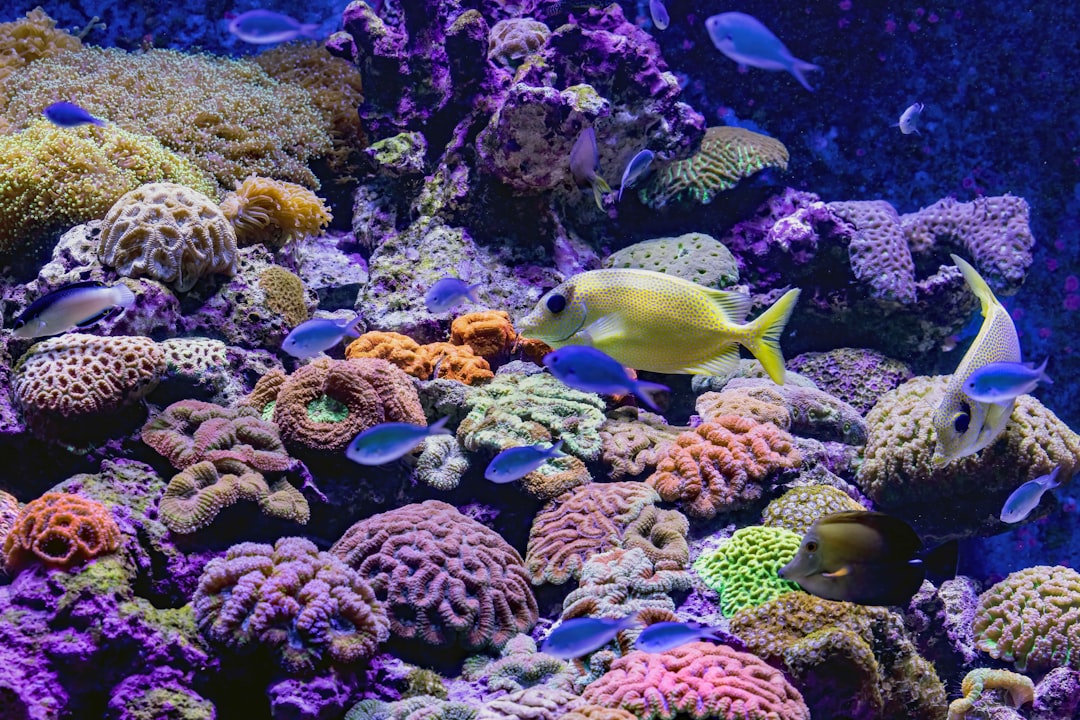
Photo by David Clode on Unsplash
Understanding Cryptocaryon irritans: The Ich Lifecycle
Before treating ich effectively, you need to understand why it is so persistent. Cryptocaryon irritans goes through four life stages, and most treatments can only target one of them.
The parasite begins as a trophont: the visible white spot feeding on your fish’s skin and gills. This stage is the one hobbyists notice first, but it is already too late to act on the trophont itself. After a few days of feeding, the trophont drops off the fish and becomes a protomont, crawling along the substrate and rock surfaces. The protomont then encysts into a tomont, which divides asexually to produce hundreds of theronts. Those theronts are released as free-swimming infective stages that seek out new fish hosts. The cycle repeats every 3-7 days at typical reef temperatures (78-80 degrees F), and faster at higher temperatures.
The critical insight here: only the free-swimming theront stage is vulnerable to most treatments. The encysted tomont is protected by its cyst wall and nearly impossible to kill without nuclear options that would destroy your reef. This is why copper treatment in a bare-bottom quarantine tank works so well: copper remains at therapeutic levels and kills theronts as they hatch, breaking the cycle over 4-6 weeks. In a display reef, the parasite hides in live rock, substrate, and crevices where no treatment can reach it reliably.
Understanding this lifecycle also explains what we mean when we say a reef tank needs to “run fallow”: if no fish hosts are present, theronts hatch, fail to find a host, and die. The tank eventually becomes parasite-free, but only after every tomont has cycled through and every theront has died without completing its lifecycle.
Why Most Ich Treatments Are Incompatible with Reef Tanks
The most effective treatments for Cryptocaryon irritans are also among the most toxic substances you can add to a reef tank.
Copper sulfate and chelated copper are the gold standard for ich treatment in fish-only systems. They work by disrupting the parasite’s ability to regulate ions, killing theronts and trophonts on contact. Copper is highly effective and well-understood. It is also lethal to all invertebrates: snails, shrimp, crabs, urchins, and virtually all corals. Even trace copper contamination on live rock can persist for years, which is why a tank treated with copper is often considered permanently incompatible with invertebrates. You cannot treat a reef display with copper and then remove it. The rock absorbs and re-releases copper long after the initial treatment ends.
Malachite green and formalin combinations (common in products like Ich-X) are effective but similarly reef-hostile. Formalin is a powerful biocide that kills parasites and, at reef tank doses, will damage corals and crash biological filtration.
Chloroquine phosphate is an increasingly popular option in fish-only or bare-bottom quarantine systems. It is gentler than copper for fish and has a good track record against ich. It is still harmful to invertebrates and not safe for reef display use.
Reef-labeled treatments are sold as alternatives, but many have limited clinical evidence and inconsistent results. We have tested several “reef-safe” ich products over the years and found that most reduce visible symptoms temporarily without eliminating the parasite. They may lower the parasite burden enough to let a healthy fish cope, but they do not break the cycle.
For most reefers, the only path to actually eliminating ich in a reef tank system involves a combination of quarantine treatment for all fish and a fallow period for the display tank.
The Quarantine Tank: The Only Reliable Ich Treatment for Reef Systems
The quarantine tank method is the standard recommendation from experienced reef keepers, and for good reason: it works. It requires removing all fish from the display, treating them in a separate system, and letting the display run fallow long enough to starve out any remaining parasites.
Setting Up a Quarantine Tank for Ich Treatment
You do not need an elaborate setup. A 10-gallon tank works for smaller fish; go larger if you are treating multiple fish or larger specimens. You need:
- A bare-bottom tank (no substrate for tomonts to hide in)
- Reliable filtration, ideally a sponge filter that you have pre-cycled in your display
- A heater set to 80-82 degrees F (slightly elevated to speed up the ich lifecycle)
- A thermometer, hiding spots for fish stress (PVC elbows work well), and a tight-fitting lid
A quarantine tank like the DuckSky 10-Gallon Smart Fish Tank Aquarium Kit can work as a temporary treatment system, as it includes filtration and is easy to break down and disinfect when treatment is complete.
Do not use copper in a tank with biological filtration media you intend to reuse. If you treat with copper, plan to discard or thoroughly bleach all filter media afterward. Copper destroys nitrifying bacteria.
Treatment Protocol: Copper or Reef-Safe Alternatives
Once your fish are in the quarantine tank, you have two primary options:
Option 1: Therapeutic copper. Use a chelated copper product (e.g., Seachem Cupramine) at the manufacturer’s recommended therapeutic level and hold it there for a minimum of 30 days. Test copper levels daily with a copper-specific test kit. Maintaining accurate copper concentration is critical; too low and it is ineffective, too high and it is toxic to your fish.
Option 2: Chloroquine phosphate. At 40 mg/L for 30 days, this has shown good efficacy against Cryptocaryon. It is less stressful on some sensitive fish than copper and does not require as frequent dosing to maintain levels.
Option 3: Reef-safe alternatives in the QT. For fish that cannot tolerate copper (mandarins, pipefish, seahorses), Ruby Reef Rally Pro is a commonly used option. Ruby Reef Rally Pro is formulated without copper or harsh chemicals and is used as a bath treatment or low-level tank treatment. Results are more variable than copper, but it can be effective for ich when applied correctly and consistently.
Fallow Period for the Display Tank
While your fish are in quarantine treatment, the display tank must run with no fish for a minimum of 8 weeks at tropical temperatures (78-80 degrees F). Raising the temperature to 82 degrees F can shorten the fallow period to 6 weeks by accelerating the parasite lifecycle, but do not exceed temperatures your corals can tolerate.
During the fallow period, your corals, invertebrates, and clean-up crew stay in the display. The ich parasites hatch, fail to find a host, and die. After 6-8 weeks, the parasite population in the display should be at or near zero.
When reintroducing fish, do it slowly. Acclimate properly and monitor for any signs of reinfection. See our guide on how to acclimate fish and corals safely for a step-by-step process.
Hyposalinity: What It Is and When It Works
Hyposalinity treatment reduces salinity in the quarantine tank to a level that disrupts the ich parasite’s ability to osmoregulate. The target salinity for hyposalinity treatment is typically 1.009 specific gravity (14-16 ppt), well below the normal reef salinity of 1.025-1.026.
At low salinity, the ich trophont struggles to survive on the fish, and free-swimming theronts die more quickly. Hyposalinity is not suitable for a reef display (corals, invertebrates, and most marine bacteria cannot survive it), but it is a viable option in a fish-only quarantine tank.
Hyposalinity vs. Copper: A Comparison
| Factor | Hyposalinity | Copper Treatment |
|---|---|---|
| Efficacy vs. Cryptocaryon | Moderate; reduces but may not eliminate | High; breaks cycle reliably at therapeutic levels |
| Fish stress | Low-moderate if reduced slowly | Moderate; some species sensitive |
| Risk to biological filtration | High (crashes bacteria at low salinity) | High (copper destroys bacteria) |
| Equipment needed | Refractometer, RO water supply | Copper test kit, copper medication |
| Treatment duration | 4-6 weeks minimum | 30+ days at therapeutic level |
| Compatible with all fish? | Not all; elasmobranchs and some species sensitive | Not all; scaleless fish very sensitive |
| Proven to eliminate ich fully? | Sometimes; results inconsistent in literature | Yes, when maintained correctly |
To monitor salinity accurately during hyposalinity treatment, you need a reliable refractometer, not a swing-arm hydrometer. The Aqueous Lab Salinity Refractometer with ATC is an affordable option that reads in both specific gravity and PPT with automatic temperature compensation, which matters when you are trying to hit a precise 14 ppt target.
In our experience with hyposalinity treatment, it works best as a complement to a fallow period rather than as a standalone cure. Fish treated with hyposalinity in QT while the display runs fallow have much better outcomes than hyposalinity alone.
UV Sterilizers: A Supporting Tool, Not a Cure
A UV sterilizer passes tank water past a UV lamp that kills free-swimming microorganisms and parasites. For ich specifically, a UV sterilizer set up and sized correctly can kill theronts as they pass through the unit, reducing the total parasite load in the water column. This does not cure ich, but it can slow the progression of an outbreak and reduce the severity.
For a UV sterilizer to have meaningful impact on ich, flow rate matters significantly. The water must pass the UV lamp slowly enough to receive a lethal dose of radiation. The general guidance from researchers including work published through CORAL Magazine’s disease resources is that you need contact time of several seconds, which means a flow rate well below the UV unit’s maximum rating for general clarification.
UV sterilizers are a reasonable addition to a reef tank as a preventive tool, not an emergency treatment. Running a UV unit continuously can reduce the frequency of outbreaks and lower the theront load during a fallow period, but it will not eliminate an established ich infection on its own.
Common Mistakes When Treating Reef Tank Ich
Treating in the display tank. This is the most common error. Hobbyists add “reef-safe” ich treatments to the display hoping to clear the infection without removing fish. This rarely works and delays proper treatment. Every week spent on ineffective display treatment is another week the parasite is reproducing.
Not completing the full quarantine duration. Ich symptoms disappear when trophonts drop off the fish. Fish will look completely healthy a few days into quarantine treatment, often before theronts have finished hatching and dying. Ending treatment at the first sign of recovery guarantees reinfection. Complete the full 30+ days in QT and the full 6-8 week fallow in the display.
Skipping the quarantine tank altogether. Introducing new fish directly into a reef display without quarantine is one of the leading causes of ich introductions. Even fish that look healthy can be carrying a subclinical parasite burden. Our guide on common reef tank pests and how to handle them covers the quarantine protocol as a preventive measure.
Inconsistent copper levels. Copper treatment requires holding levels in a precise therapeutic range. Below that range, it does not kill the parasite. Above it, it becomes toxic to fish. Test copper levels daily during treatment.
Raising temperature too aggressively. Accelerating the ich lifecycle with heat works, but pushing temperatures above 83-84 degrees F stresses corals and fish alike. Increment temperature slowly, no more than 1 degree per day.
Not running the display fallow long enough. Eight weeks at 78-80 degrees F is the commonly cited minimum. Some reefers cut it short when they are anxious to reintroduce fish. Cutting the fallow period to 4-5 weeks risks reintroducing fish into a tank still carrying viable tomonts.
Reintroducing fish without continued quarantine protocol. After the fallow period ends, future fish additions still need to go through quarantine before entering the display. A single unquarantined fish can restart the entire cycle.
Frequently Asked Questions
Can ich go away on its own in a reef tank?
Ich does not go away on its own. What appears to be a natural resolution is usually the trophonts dropping off the fish to encyst, giving the fish a brief symptom-free window before the next generation of theronts attacks. A healthy, well-fed fish with low stress can tolerate a low-level ich burden for months or even years without dying, but the parasite is still present and will resurge during any period of stress. The only way to actually eliminate ich from a reef system is the quarantine-plus-fallow method described above.
Can I keep corals and invertebrates in the tank during the fallow period?
Yes. Corals, anemones, invertebrates, and clean-up crew are not hosts for Cryptocaryon irritans. They can remain in the display during the entire fallow period. The parasite cannot complete its lifecycle without a fish host, which is the entire basis of the fallow method.
How do I know if my display tank is ich-free after the fallow period?
There is no test for ich in the water column. After the recommended fallow period, the standard practice is to reintroduce one hardy, disease-resistant fish, observe it closely for 2-3 weeks, and only reintroduce additional fish if that fish remains symptom-free. Many reefers use a small damselfish or a known hardy specimen as a “sentinel fish” for this purpose.
What if I can’t remove all my fish to set up a quarantine?
Some fish (large morays, established fish that cannot be caught without tearing apart the reef) make the removal process very difficult. In these cases, the practical options narrow considerably. Running a properly sized UV sterilizer, keeping fish well-fed and water quality excellent, and reducing stressors can help manage a chronic low-level infection. Products like Ruby Reef Rally Pro may reduce visible symptoms even in the display. But this is management, not cure. The fish will continue to carry the parasite.
How long does ich survive without fish in a reef tank?
At 78-80 degrees F, the consensus from reef keeping research and experience is that Cryptocaryon irritans cannot survive more than 6-8 weeks without a fish host. At 82-84 degrees F, this can be reduced to 4-6 weeks, but keep in mind the heat stress on your corals at that range.
Safety note: Copper-based medications are toxic to humans in concentrated form. When mixing or handling copper treatments, avoid skin contact and wash hands thoroughly. Never dose copper directly into a reef display tank, as it cannot be fully removed and will poison corals and invertebrates permanently. If fish are showing rapid gill movement, extreme lethargy, or loss of coordination during treatment, perform a water change immediately and contact a local fish veterinarian or aquatic specialist.
Treating Reef Ich Takes Time: Plan for It
Ich in a reef tank is one of those problems that gets worse the faster you try to fix it with shortcuts. The only approach that actually works is also the slowest one: remove the fish, treat them in a dedicated quarantine tank for 30+ days, and let the display run without fish for 6-8 weeks. Done correctly, you will have an ich-free reef and healthy, fully recovered fish to reintroduce.
Bookmark this guide and refer back to it when you are setting up your quarantine protocol. If you are new to reef keeping and want to build a strong foundation, start with our best affordable test kits for reef tank water chemistry guide, because maintaining stable water quality is the best defense against ich-related losses.
Related reading: How to Acclimate Fish and Corals Safely