Coral Placement Guide: Light and Flow Requirements by Species
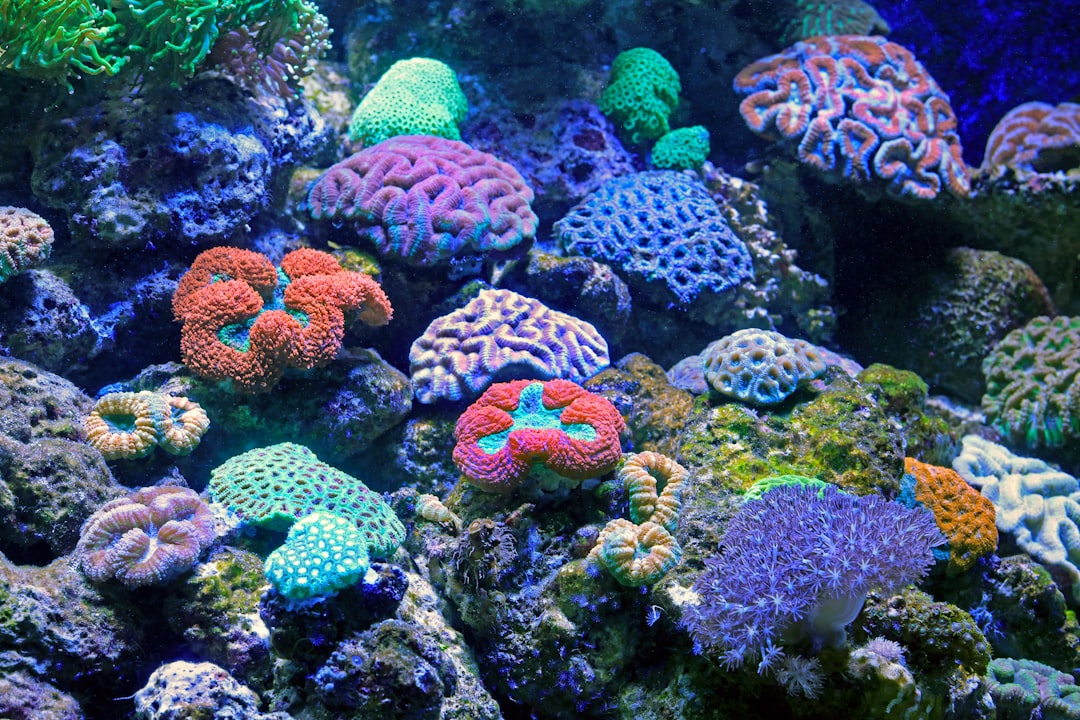
Photo by David Clode on Unsplash
One of the most common frustrations in reef keeping is placing a coral somewhere reasonable, watching it look unhappy for weeks, then realizing it was getting too much light, too little flow, or both. We’ve been there. Moving a coral that has started attaching to rock is stressful for the animal and risks spreading slime or triggering a chemical defense response that can irritate nearby corals.
Getting placement right the first time requires knowing what each coral type actually needs, not just “low, medium, or high” - which means almost nothing without context. This guide breaks down light and flow requirements by coral category, gives you a practical placement process, and covers the most common mistakes that send new reefers scrambling for their aquarium tongs.
Livestock health note: Moving corals frequently causes stress and can trigger defensive mucus secretion. Plan placement before adding a new coral to your tank. If a coral needs to be relocated, do it once and give it four to six weeks to settle before assessing again.
Understanding PAR and Light Zones in Your Reef Tank
PAR stands for Photosynthetically Active Radiation - it’s the measurement that actually tells you how much usable light a coral’s zooxanthellae can work with. LUX and wattage are nearly useless for coral placement because they don’t account for the specific wavelengths corals need.
In our experience testing tanks with a PAR meter, there is almost always more variation within a tank than hobbyists expect. Even in a 75-gallon display, the difference between the sandbed directly under the light and a shaded rock corner can be 10x or more.
General PAR ranges by coral category:
- Soft corals and mushrooms: 50-150 PAR
- LPS corals (most species): 75-200 PAR
- SPS corals (acropora, montipora): 200-400+ PAR
These are starting points, not absolutes. A hammer coral that has been kept under low light in a store will bleach under the same intensity that a well-adapted hammer handles easily. Acclimation matters as much as the final target value.
How to find your tank’s PAR zones
If you don’t already own a PAR meter, this is one of the most useful diagnostic tools in the hobby. The SICWEDIM PAR Meter for Reef Tank includes an extension pole for reaching the sandbed without getting your arm wet, which makes mapping a full tank much faster. Take readings at the sandbed, mid-column, and near the surface at multiple horizontal positions - aim for at least 9 data points in a 36-inch tank.
Mark your zones with tape on the outside glass if needed. Knowing that your top-left corner runs 350 PAR and your bottom-right corner runs 80 PAR transforms placement from guesswork into an actual decision.
For more detail on dialing in your reef lighting setup, see our guide to aquarium lighting for reef tanks.
Understanding Flow: Laminar vs. Turbulent and Low vs. High
Flow affects corals differently depending on whether it is steady and directional (laminar) or chaotic and multidirectional (turbulent). Most modern wave makers produce turbulent or pulsing flow, which is generally better for a mixed reef than a single powerhead pointing in one direction.
Low flow zones exist behind rock structures, at the ends of the tank far from powerheads, and near the sandbed in the shadow of rockwork. Low flow means detritus settles in these spots and corals there need to be capable of clearing waste themselves.
High flow zones sit directly in front of powerheads, at the surface of the water, and in narrow channels between rocks. High flow keeps nutrients from accumulating on coral tissue but can stress soft-bodied species or knock over smaller frags.
Flow requirements by category:
- Mushrooms (Discosoma, Rhodactis): Very low to low. These actively retract in high flow.
- Leather corals and soft corals: Low to moderate. They need enough flow to shed their waxy coat during “polyp bail,” but direct blasting causes them to stay closed.
- LPS - hammer, frogspawn, torch: Moderate, indirect. Long sweeping tentacles should move gently. Direct powerhead flow causes tissue retraction and can damage sweeper tentacles.
- LPS - acans, brain corals: Low to moderate. Stable flow, not turbulent bursts.
- LPS - candy cane, goniopora: Moderate. They extend more fully with gentle, consistent flow.
- SPS - montipora: Moderate to high. They are more tolerant of direct flow than acropora.
- SPS - acropora: High, turbulent, multidirectional. This is non-negotiable for long-term health.
We’ve kept both the AQQA Aquarium Wave Maker with Controller and a dedicated tunze, and the wave maker’s pulse mode does a noticeably better job of creating the random turbulence SPS need compared to a single constant-flow pump at the same GPH rating.
For a detailed breakdown of positioning powerheads to eliminate dead spots, see our guide to powerhead placement and flow in a reef aquarium.
Coral Placement by Type: Where in the Tank to Put Them
Soft corals and mushrooms
Mushrooms and leathers are the most forgiving corals to place and the most likely to spread aggressively if conditions suit them. Place them low and away from high-light areas unless you have confirmed their tolerance through a slow acclimation process.
Leather corals such as toadstool and finger leathers do well on the rockwork at mid-height. They release toxins when irritated and should not be placed directly adjacent to LPS or SPS. Give them at least four to six inches of clearance in all directions.
Zoanthids and palythites can tolerate a wide range of conditions but tend to spread faster under moderate to high light. Starting them lower and watching their polyp extension is a reliable way to find their optimal position without risking bleaching.
LPS corals
LPS corals are the sweet spot for most hobbyists - more forgiving than SPS but more visually striking than softies. The biggest placement challenge is their tentacle reach. Many LPS extend sweeper tentacles at night that can sting neighbors up to four to six inches away.
Place euphyllia species (hammer, torch, frogspawn) with generous spacing. In our experience, a hammer and a torch on the same rock structure almost always end up in a nightly tentacle war even when they look well-separated during the day. These species are also allelopathic with each other - keep different euphyllia genera separated.
Brains and acans tolerate closer proximity to other LPS but still need their own territory on the sandbed or a flat rock ledge where their mouths can access food without competition.
SPS corals
SPS placement is the least forgiving. Acropora in particular will show early signs of stress (STN - slow tissue necrosis) starting at the base if flow or light is inadequate. Place acropora in the top third of the tank, in a high-flow zone, and verify PAR is above 200 before committing.
Montipora is a more accessible entry point to SPS - it tolerates mid-tank placement and a wider PAR range. Plating montipora works well on the upper rockwork where its horizontal growth pattern gets even light coverage.
Coral Placement Comparison Table
| Coral Type | PAR Range | Flow Level | Tank Position | Notes |
|---|---|---|---|---|
| Mushrooms (Discosoma) | 50-100 | Very low | Sandbed to low rock | Keep away from high-light zones |
| Leathers (toadstool, finger) | 75-150 | Low-moderate | Mid rock | Allelopathic - give clearance |
| Zoanthids | 75-200 | Low-moderate | Mid rock or sandbed | Expand faster under more light |
| Hammer/Torch/Frogspawn | 100-200 | Moderate, indirect | Mid rock | No direct powerhead flow; space from other euphyllia |
| Acans / brainss | 75-150 | Low-moderate | Sandbed or flat ledge | Need feeding access |
| Candy cane | 100-200 | Moderate | Mid rock | Extension improves with gentle, consistent flow |
| Montipora (plating) | 150-300 | Moderate-high | Upper rock | Tolerant entry-level SPS |
| Acropora | 250-400+ | High, turbulent | Top third of tank | Non-negotiable on flow; STN is fast |
Step-by-Step: How to Place a New Coral
1. Map your PAR zones before the coral arrives. Take readings at the positions you are considering. Don’t rely on what “looks” like a bright or shaded spot.
2. Identify flow zones. Observe where detritus settles after feeding. Dead spots with accumulated detritus are low-flow zones. Use that as your map.
3. Acclimate to lighting gradually. Even if a coral’s target position is high-light, start it lower or on the sandbed for one to two weeks, then move it up in stages. This is especially important if it came from a dealer running low-light conditions. We typically move corals up one “step” every seven to ten days.
4. Use coral putty for temporary placement. Don’t commit a frag to epoxy or super glue until you have confirmed it is happy and extending normally. Two-part epoxy putty lets you set and remove frags repeatedly.
5. Watch for extension in the first 48 hours. A healthy coral will begin extending polyps or tissue within one to two days of placement. If it stays retracted beyond 72 hours, something is wrong - check for pests, reconsider flow, or temporarily lower it.
6. Check for aggression at night. Run your phone camera or a red dive light at midnight after adding LPS. You will often see tentacle extension and potential sweeper conflicts you cannot detect during daytime observation.
Common Coral Placement Mistakes
Placing SPS on the sandbed “to start.” The sandbed is the worst place for acropora. Low flow plus accumulated detritus is a fast path to RTN.
Ignoring allelopathy. Soft corals, especially leathers and some zoanthids, release chemical compounds that stress LPS and SPS. Not just physical contact - chemical release into the water column. If your SPS is struggling and you can’t find another cause, consider what’s within a foot of it on the rockwork.
Assuming “moderate” means the same thing across sources. A store’s “moderate flow” and your tank’s “moderate flow” can vary by 5x or more. Always anchor recommendations to a PAR number or a specific GPH relative to tank volume.
Moving a coral too soon. Four weeks feels like a long time when a coral looks a little stressed. But moving it repeatedly is almost always worse than leaving it in a slightly suboptimal spot while you observe it. Every move resets the acclimation clock.
Placing long-tentacled LPS near rockwork edges. Hammer and torch corals extend much further than they appear during the day. A coral sitting three inches from a rock edge at noon may be making contact with that rock at 2 AM.
FAQ
How do I know if a coral is getting too much light?
Bleaching is the most obvious sign - the coral will lose color and begin to look white or pale. Before full bleaching, many corals will retract further than usual or take longer to open each day. Some LPS, particularly acans, will also puff with excess water to shield themselves from intense light. If you see these signs, reduce intensity or move the coral lower in the tank immediately. A reef LED light with adjustable intensity makes this easier than lights with fixed output.
Can I place different euphyllia species next to each other?
We would advise against it. Hammer, torch, and frogspawn are all euphyllia species and they are chemically allelopathic with one another. Even when their sweeper tentacles don’t visually reach each other, the chemical competition can suppress polyp extension in both corals over time. Keep at least six inches of clear water between different euphyllia genera.
How long should I wait before deciding a placement isn’t working?
Give it four weeks minimum before concluding that placement is the problem. In the first week, most corals are adjusting to new water chemistry, light spectrum, and flow dynamics - they will often look worse before they look better. If the coral shows active signs of recession (tissue pulling back from the skeleton) within the first two weeks, that warrants a sooner intervention. Stable retraction without recession is usually just acclimation.
How does PAR change as my lights age?
LED lights degrade gradually, with output typically dropping 10-20% over two to three years of continuous use. If you set your SPS positions based on PAR readings when the lights were new, retest annually. Corals that were thriving may begin to show signs of light stress over time even though nothing visually changed.
Recommended Products
These are tools we use for coral placement and reef light management:
- SICWEDIM PAR Meter for Reef Tank with Extension Pole - the most practical entry into PAR mapping; the extension pole is genuinely useful for reading the sandbed without draining half the tank
- AQQA Aquarium Wave Maker with Controller - pulse mode creates the multidirectional turbulence SPS need; programmable day/night cycle lets you match flow to coral rest periods
- AquaHorti MegaReef 100 Reef LED Aquarium Light - adjustable intensity and spectrum make acclimating new corals significantly easier than fixed-output lights
For a deeper look at how water chemistry interacts with coral health, the NOAA Coral Reef Conservation Program is a solid reference for understanding why stable parameters matter alongside placement decisions.
Bookmark this guide and check out our coral care guide for beginners next - it covers the fundamentals of feeding, fragging, and long-term coral health that work alongside good placement practices.