Powerhead Placement and Flow in a Reef Aquarium
Water movement is one of the most underrated variables in a reef aquarium. New hobbyists spend hours dialing in salinity and alkalinity but mount a single powerhead in the corner and call it done. In our experience, poor flow causes more slow-burn problems in reef tanks than almost any other equipment decision - dead spots accumulate detritus, corals starve from lack of nutrient delivery, and algae takes hold in areas the main circulation never reaches.
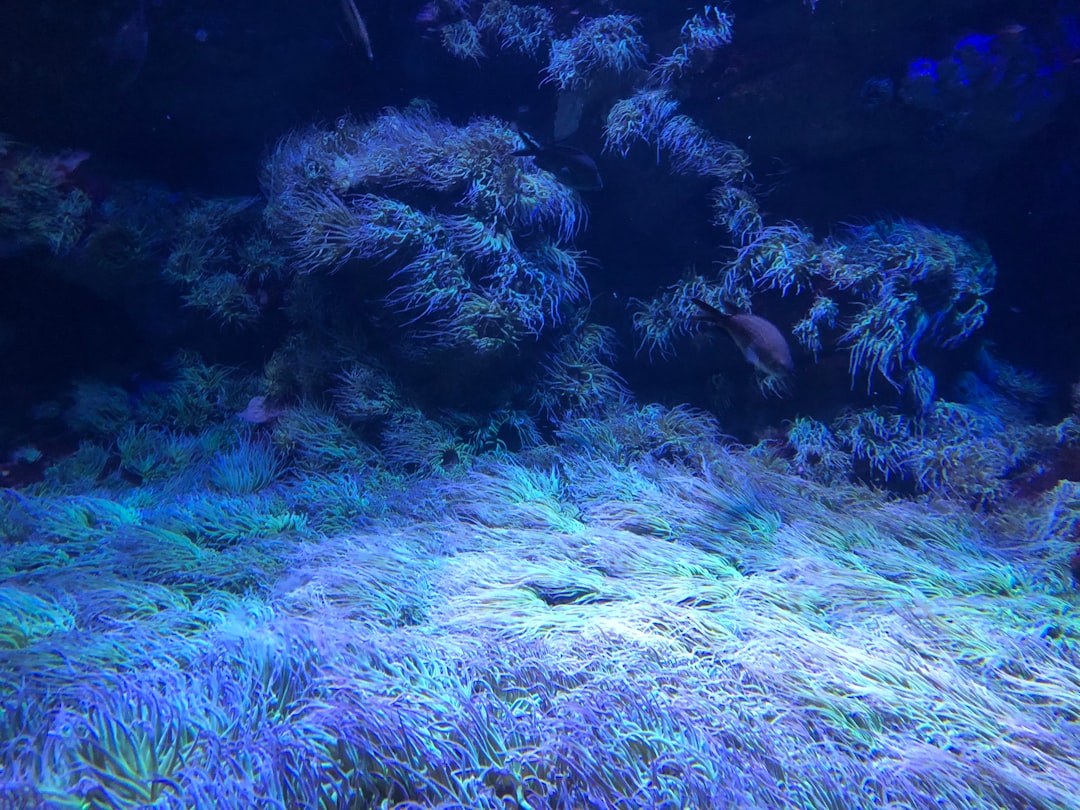
Photo by Niklas Plenter on Unsplash
Getting flow right is not complicated, but it does require understanding a few principles - how much turnover your tank needs, what kind of powerhead creates the right pattern, and where to position multiple heads for turbulent rather than laminar flow. This guide walks through all of it.
Why Water Flow Matters in a Reef Tank
In the ocean, coral reefs are high-energy environments. Tidal currents and wave surge constantly move water across reef structures, delivering oxygen and dissolved nutrients to coral tissue while flushing waste products away. Captive corals rely on the same principle. Polyps extend their feeding tentacles into the current - if flow is too low, they retract and the coral slowly starves. If flow is too intense and direct, the same polyps get blasted shut and cannot feed.
Flow serves four specific functions in a reef tank:
Oxygenation. Surface agitation drives gas exchange, keeping dissolved oxygen high and carbon dioxide from building up. Good flow through the water column brings oxygenated surface water down to deeper-placed corals.
Nutrient delivery. Phytoplankton, zooplankton, and dissolved organics need to reach coral tissue for feeding. Turbulent flow keeps particles suspended and moving rather than settling out.
Waste removal. Detritus, fish waste, and uneaten food need to stay in suspension long enough for your protein skimmer and mechanical filtration to capture them. Dead spots on the bottom or in rockwork corners allow waste to accumulate and break down into ammonia and nitrate.
Temperature stabilization. Even in a small tank with a heater, stagnant pockets near the glass can run several degrees warmer than the rest of the system. Consistent flow evens out temperature across the tank.
For reef tanks specifically, flow also plays a role in coral placement decisions. As NOAA’s coral reef biology resource describes, corals have evolved to extract food and nutrients directly from water moving across their tissue - the same mechanism hobbyists need to replicate in a closed system.
How Much Flow Does Your Reef Need?
The standard starting point is total tank volume turnover per hour (TPH). These are ranges, not hard rules - actual numbers depend on livestock, rockwork, and how flow is distributed.
Fish-only with live rock (FOWLR): 10-20x turnover. A 75-gallon FOWLR tank needs roughly 750-1,500 GPH of total flow from all pumps combined.
Soft coral and mixed reef: 20-30x turnover. Softies like leathers, mushrooms, and zoanthids do well with moderate flow, though individual species vary significantly.
LPS-dominant reef: 20-40x turnover. LPS corals like hammers, frogspawn, and brain corals prefer moderate indirect flow - enough movement to make their flesh sway without blasting them.
SPS-dominant reef: 40-60x or higher. Small polyp stony corals like Acropora and Montipora need intense, random turbulence. A 75-gallon SPS system might run 3,000-4,500 GPH total, split across multiple powerheads.
These numbers assume the flow is distributed properly across the tank - a single 3,000 GPH pump pointed straight at one end of the tank creates a high-velocity laminar stream that pushes water through the middle and leaves the rest stagnant.
Types of Powerheads for Reef Tanks
Modern reef powerheads fall into two categories based on motor type.
AC powerheads run on standard alternating current with a fixed output. They are inexpensive, reliable, and simple - no controller required. The downside is that you cannot adjust flow without a separate controller, and they produce constant, predictable laminar flow rather than the variable surge that corals prefer.
DC wavemaker powerheads use a direct current motor with a built-in controller. You can adjust speed, set pulse modes, and program wave patterns from a simple dial or app. DC motors also run cooler and consume less power for equivalent flow. For most reef keepers today, DC wavemakers are the standard choice because variable flow patterns more closely mimic natural reef conditions.
The Hydor Koralia Nano 240 Circulation Pump is a solid AC option for nano tanks and as a supplemental circulation pump - straightforward, quiet, and easy to position with the magnetic mount. For a mid-size reef running 30-75 gallons, the Jebao OW Sine Wave Powerhead gives you DC control and multiple wave modes at a reasonable price point. For larger SPS-dominated systems where flow volume and precision matter most, the EcoTech Marine VorTech MP10 is the benchmark - the wet and dry motor halves mount on either side of the glass, eliminating all hardware from the water column and allowing for fine-grained reef crest simulation modes.
Where to Place Powerheads in Your Tank
Placement is where most beginners go wrong, and it is the single biggest factor in whether your flow actually reaches the whole tank.
Start at the top third of the tank. Powerheads placed high in the water column create downward circulation that brings surface-oxygenated water into deeper areas and keeps the glass clear. Mounting a powerhead near the bottom tends to stir up substrate without improving overall circulation.
Aim for the rockscape, not the glass. Flow directed at your live rock causes turbulence as water hits the irregular surface, creating the random, multi-directional movement corals respond to. Flow aimed at a bare glass panel just bounces back in a predictable pattern.
Use opposing powerheads. Two powerheads aimed at each other from opposite ends of the tank create a collision zone of turbulent flow in the middle - this is the most effective way to eliminate dead spots in a standard rectangle aquarium. The collision point can be adjusted by changing the angle of each head. In our setups, we angle the powerheads slightly downward and toward the center, which spreads the collision zone across the mid-depth of the tank rather than confining it to one level.
Match powerhead count to tank volume. A single powerhead in any tank over 40 gallons will almost always create dead spots regardless of GPH rating. Two heads on opposite sides is the minimum for a standard rectangle. Larger tanks (75 gallons and up) typically need three or four, especially if the rockscape is complex.
Consider the return pump. Your sump return pump is also contributing flow to the display. Account for it in your total TPH calculation and position it so the return nozzle adds useful circulation rather than creating a dead zone behind it.
Creating Turbulent Flow and Eliminating Dead Spots
Random turbulence is the goal, not a consistent laminar stream. A few techniques to achieve it:
Angle powerheads slightly. Even a 15-degree angle off horizontal changes the flow path enough to break up direct laminar streams. Alternating angles between two heads creates more complex mixing.
Use wavemaker modes. Most DC powerheads include pulse modes, wave modes, and feeding modes that cycle power output throughout the day. Pulse mode alternates between low and high output on a timer (typically every 2-10 seconds). Wave mode runs paired powerheads in alternating cycles, mimicking tidal surge. We have found pulse mode to be more useful in most mixed reef setups than constant flow.
Check for dead spots with a flashlight. At night with the lights off, shine a small flashlight across the bottom glass and look for areas where detritus is piling up. Those spots indicate insufficient circulation. Repositioning a powerhead or adding a small auxiliary pump to redirect flow usually clears them within a day.
Avoid pointing flow directly at coral. Especially for LPS corals with large fleshy polyps, a direct high-velocity stream causes the polyp to close and remain retracted for hours at a time. Indirect flow that makes the coral’s flesh gently sway is the target. If a coral consistently looks closed or pulls back its tissue, check whether a powerhead is pointed directly at it.
Common Powerhead Placement Mistakes
These are the placement errors we see most often in reef tanks that are struggling:
Leaving the powerhead in the corner. The back corner of a tank is the most common mounting spot because it is out of the way and easy to reach the power cord. It is also the worst possible location for distribution - corner placement creates a strong laminar stream along one wall while leaving the opposite end stagnant.
Too few GPH for the livestock. Adding SPS corals without increasing flow is one of the most common causes of slow bleaching in the mid-tank area. If you are transitioning from a softy reef to a mixed SPS system, budget for additional powerhead capacity.
Running a skimmer in a low-flow area. Protein skimmers work best when the intake is in an area of active water movement - a protein skimmer positioned in a dead spot at the back of the sump will pull from stagnant water rather than the main water column, reducing efficiency.
Ignoring the sump. Flow within the sump matters too. If your refuge section has zero circulation, chaeto growth suffers and detritus accumulates. A small powerhead or positioning the baffles to create natural flow through each chamber makes a difference.
Leaving gyre pumps at full power. Large gyre-style pumps positioned side to side can be powerful enough to tip over frags, blow substrate off the sandbed, and stress fish. Start at 50% output and increase slowly while watching livestock behavior.
Recommended Products
- Hydor Koralia Nano 240 Circulation Pump - reliable AC powerhead for nano tanks and supplemental flow
- Jebao OW Sine Wave Powerhead - DC wavemaker with multiple modes, solid value for mid-size reef tanks
- EcoTech Marine VorTech MP10 Powerhead - premium through-glass mount powerhead with advanced wave control for SPS-focused systems
Related Reading
- Protein Skimmers for Small Reef Tanks
- Reef Tank Water Chemistry: Alkalinity, Calcium, and Magnesium
- How to Control Algae in a Reef Tank
- Reef Tank Setup for Beginners
If you are setting up flow for the first time, the reef tank setup for beginners guide covers all the core equipment decisions including return pumps and circulation as part of the overall system build.
Bookmark this guide and check out the protein skimmer guide next - skimmer performance is directly tied to how well your flow is distributing surface waste to the overflow.
As an Amazon Associate we earn from qualifying purchases at no extra cost to you.